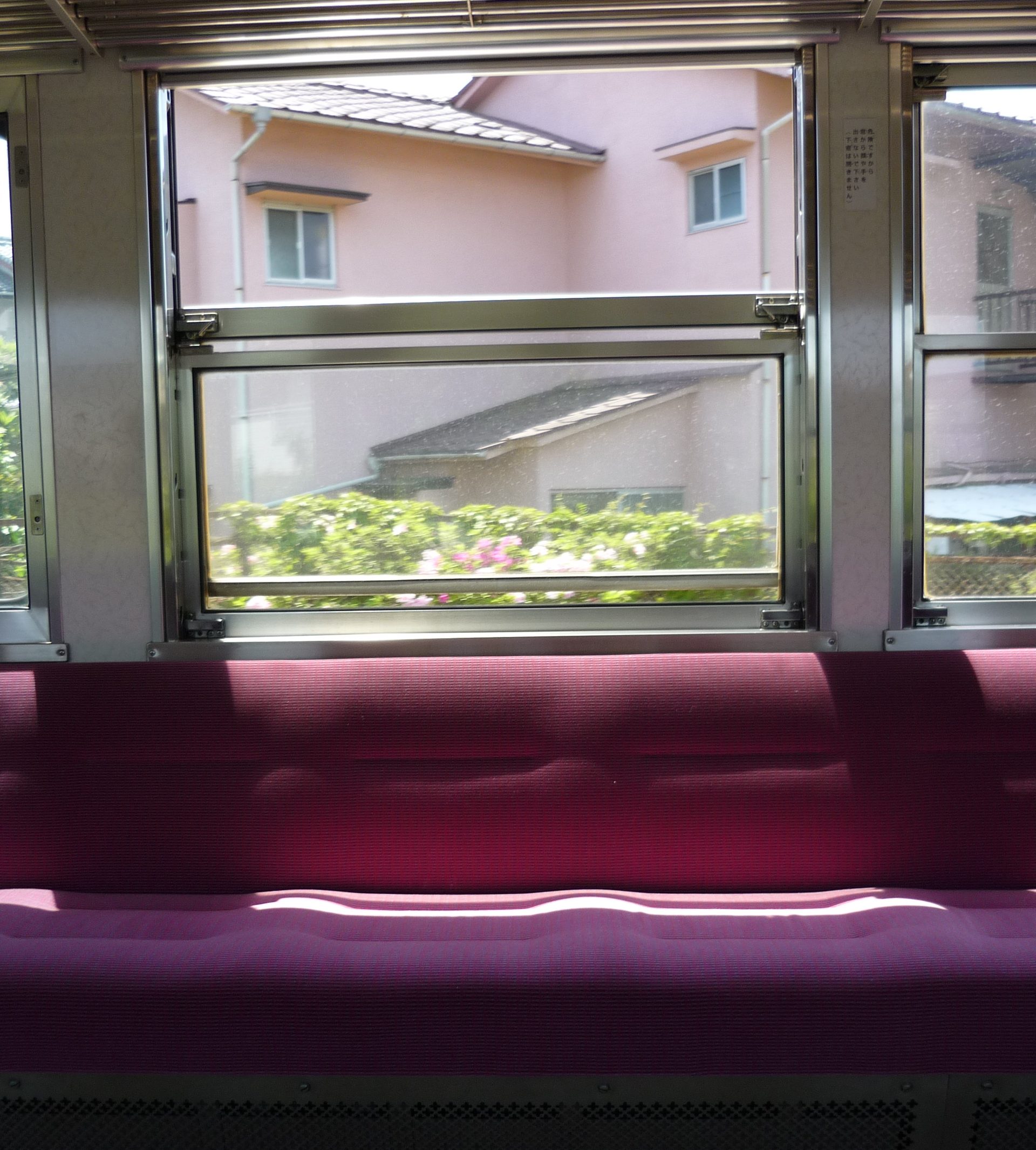
On the way back to the studio from a lunchtime exhibition visit, one of my colleagues mentioned the broader concept of interior design that she has been studying at university. She casually said, “For example, the interior of a tram is within the realm of interior design”. While transport hubs such as airports, train stations, and bus terminals are generally considered architectural (in terms of buildings), trams, trains, aircraft, and buses tend to fall within the industrial design disciplines, even though they encompass internalised spaces for carrying people on journeys. It made me curious about aspects of design responses that address travellers’ spatial and sensory experiences. This writing is more of a floating thought than a polished essay, but I hope you find it interesting…
Carriage design with rich sensory experience
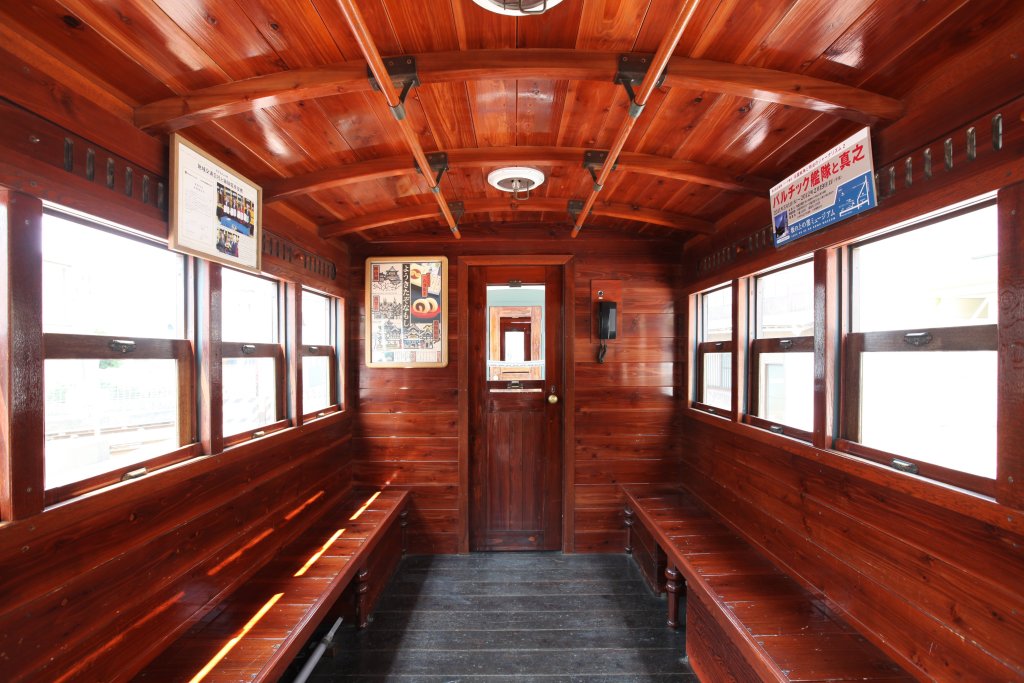
One of the most memorable experiences on a train has been Botchan ressha in my hometown, Matsuyama, Japan, named after the main character who gets on this train in Soseki Natsume’s novel Botchan. Originally a steam locomotive, the Botchan ressha now runs between Matsuyama station and Dogo with a diesel engine, while maintaining the atmosphere of the Meiji period. The interior design of the existing carriage continues to feature the original lacquered timber lining, with narrow timber bench seating on two sides. The interior is relatively dark, and the ceiling is low, but the timber’s gloss finish captures natural light, illuminating the carriage. The seats are not ‘comfortable’ by today’s standards (and it’s definitely not a commuter train), but they let you feel the wheels turning and the bumps along the way. People tend to sit on the benches but twist their bodies to look out the window behind. It has an unusual atmospheric quality, where everyone seems sensorily immersed: the touch of the hard timber bench, the sounds of the carriage and train moving, and the feeling of the breeze coming in through single-hung timber-framed windows. The interior design of the Botchan ressha is effortless and modest, yet the experience it offers is unforgettable.
Sense of comfort vs efficiency?
For this article, I looked into references on the interior design of train carriages. Not surprisingly, many sources noted that balancing passenger comfort with economic feasibility is a critical factor in train design. It makes sense that commuter trains with lower ticket prices need higher capacity and efficiency to be profitable, whereas luxurious trains with higher ticket prices do not require high capacity to be economically feasible.
Sources discuss that the relationship between comfort and efficiency extends beyond mere capacity and ‘passengers per hour per direction’ (PPHPD); it also includes passenger flow and proxemics (the study of human use of space). A video on the commuter train design by the Wall Street Journal (yes, very business- and economics-oriented) discusses the impacts of door locations, numbers, widths, and circulation spaces on carriage capacity and the potential delays caused by passengers boarding and alighting.
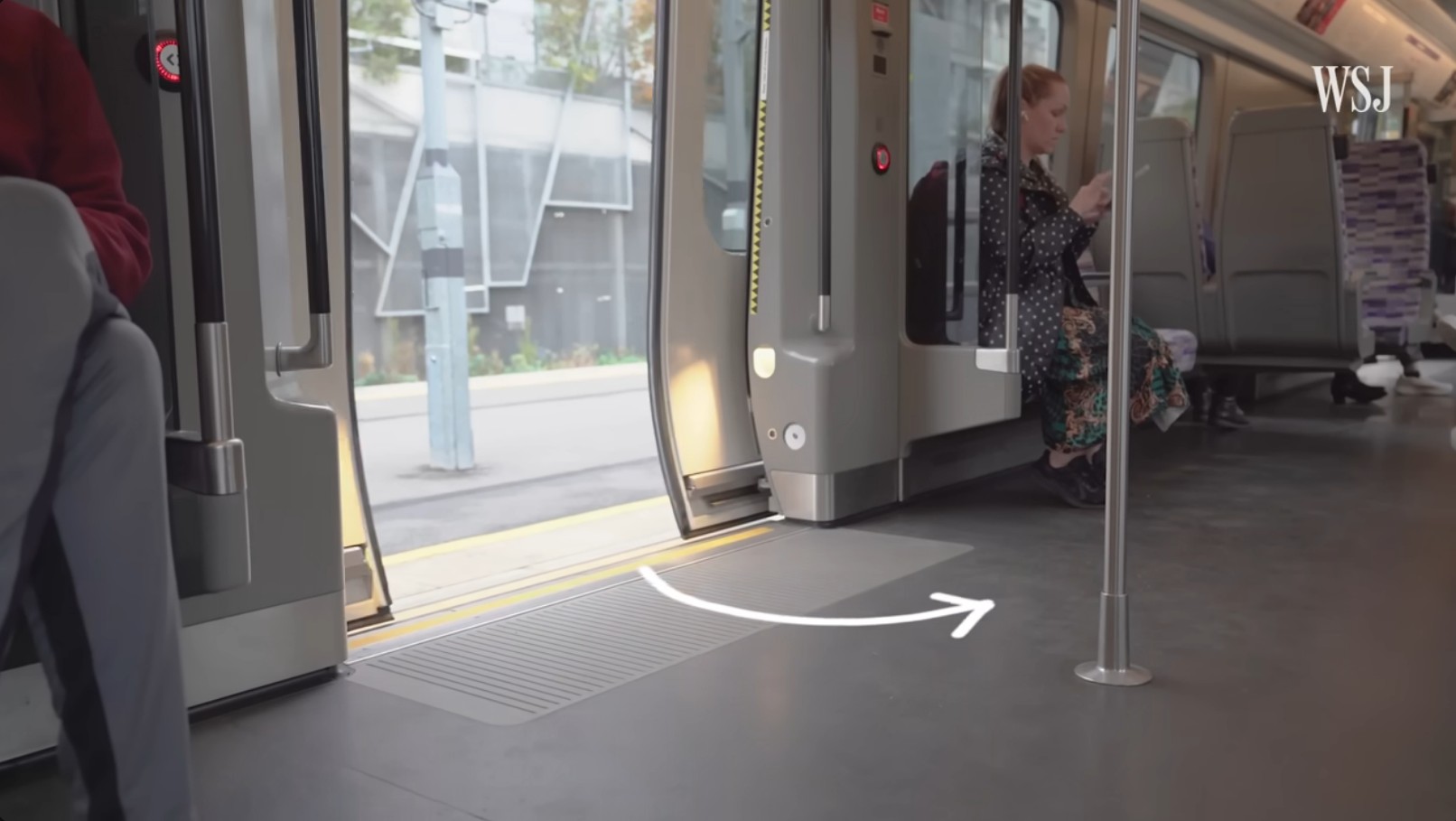
It made me think the factor at the intersection of comfort and efficiency may be the flow of people; the ease of reaching the exit door when needing to get off the train is a minor portion of the experience along the train journey that may be as powerful as the comfort of actual space of occupation (seats or standing space).
In terms of the space of occupation, a variety of design responses accommodate different senses of comfort. The integration of floor markings and signage of wheelchairs, prams and bikes in the open standing space is a simple way to demarcate prioritised use. A different upholstery colour for the priority seating near the doors makes people aware of those who may need or appreciate them the most. In Denmark, I saw a quiet ‘no talking’ carriage that let people choose where to sit based on what they wanted to do (talk vs focus/sleep). The sense of comfort may be intertwined with users’ ability to choose how they want to spend time on trains.
Inward vs outward-looking carriage designs
The interior designs of ‘luxury’ train lines are more stylistic and immersive than those of economy-oriented commuter trains. The rich materiality of internal lining, flooring and joinery, and the use of movable furniture and localised indirect lighting, reminds people of a hotel or a cosy mansion in motion. It made me think about whether the perception of luxury is inseparable from the idea of authenticity (of materials and craftsmanship), which gives the interior space a stronger personality, with a touch of materialism. There is an emphasis on the inward-looking quality of atmosphere – value in what’s inside the carriage, trying to impress the guests. The design suggests exclusivity for those who can afford and choose to be on those trains. The carriage design becomes an experience people want, rather than a means of transport they have no choice but to take.

However, while researching different train carriage designs, I came across Kazuyo Sejima’s concept for the Seibu Railway Laview:
A train seat with a landscape, as relaxing as a ‘living room’, and as a destination.
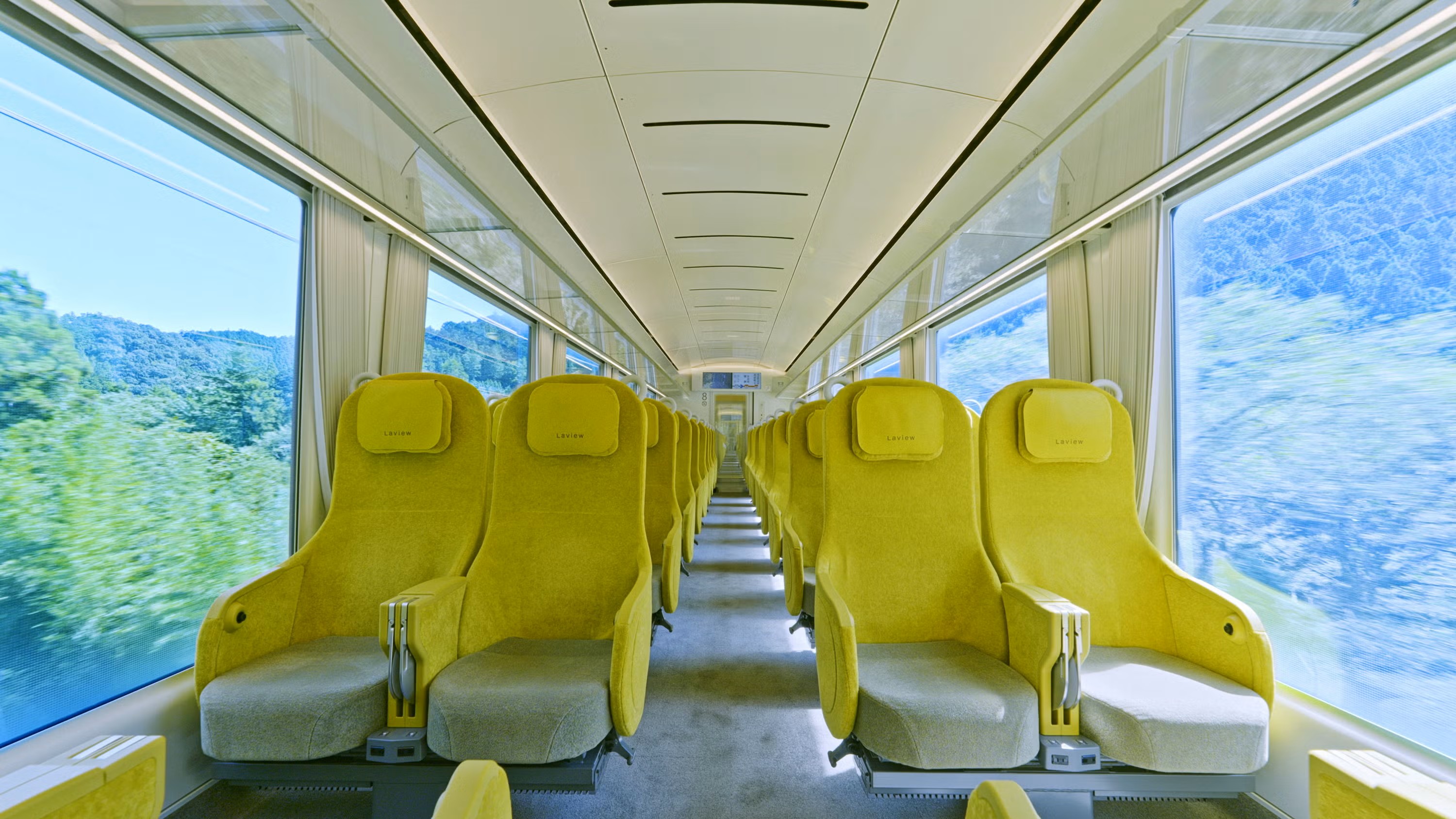
Similar to her architecture, this carriage design features large windows that extend from the ceiling to below the armrest. The sense of luxury rests on the generosity of seating and circulation spaces, ample natural light, and the calmness crafted by lighting design and mustard-yellow upholstery. The design invites people to pay attention to the landscape beyond, from the comfort of armchairs. Its ticket may not be as expensive as other ‘luxury’ train lines, but this carriage design exudes elegance, grounded in a clear design intent and outward-looking attitude that celebrates the places the train runs across. While it would attract people seeking its exceptional experience, the experience they seek may be slightly different from that of ‘luxury’ trains.
After all, carriage designs create a special atmosphere and sensory experiences that respond to people’s different needs and wants.
Local + Civic Offering
During the research, I came across an article on Kenji Minai, Chief Industrial Designer at Kinki Sharyo, who presented on railway carriage design at Autodesk University Japan 2018. Minai argues that, regardless of the type of train, carriage design needs to respond to both the civic nature, through universal design for everyone, and the local nature, informed by the cultural and social characteristics of the place. Some of his examples include the preference for metal seats in Hong Kong, where the cool metal surface provides a hygienic appearance and a moment of respite from the hot, humid climate, and the train design in Dubai, where social and gender separation needs to be taken into account in the carriage design. Minai also highlights the importance of the longevity and maintainability of design that any carriage requires to be loved by users for a long time.
What really stayed with me after reading a lot about carriage design is that the good carriage interior design is informed by thorough research into people – who, how often they use, for what purpose, what they want to experience, etc. – who use trains in specific circumstances, as well as the broader social and cultural context in which the trains are embedded. Carriage designs certainly contribute to the spatial and sensory experiences on the journey, both as an internal space and as a portal into the landscape beyond. Considering carriage design as part of interior design made a lot of sense, not only from the perspective of ‘a space within a carriage’ but also as an outcome of a rigorous, holistic design process in response to human occupation.

 Saran Kim | Blog