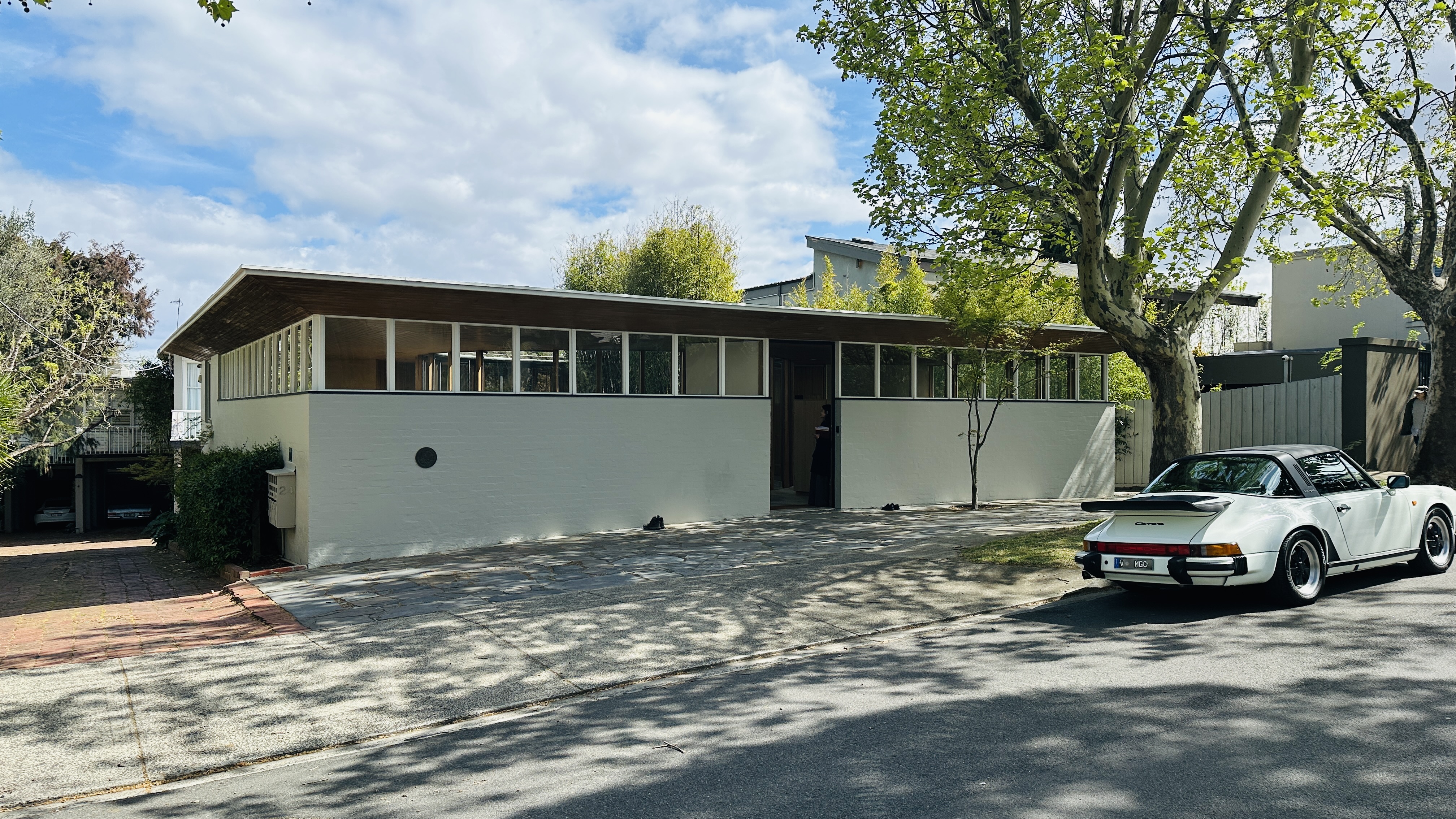
Over the two weekends in September and October, I participated in the Roy Grounds Open House. There was an opportunity to volunteer at one of five houses designed by Roy Grounds, with the huge perk of access to all of them. I signed up for the event and was then allocated to the morning shift at the Moonbria flat on the second weekend.
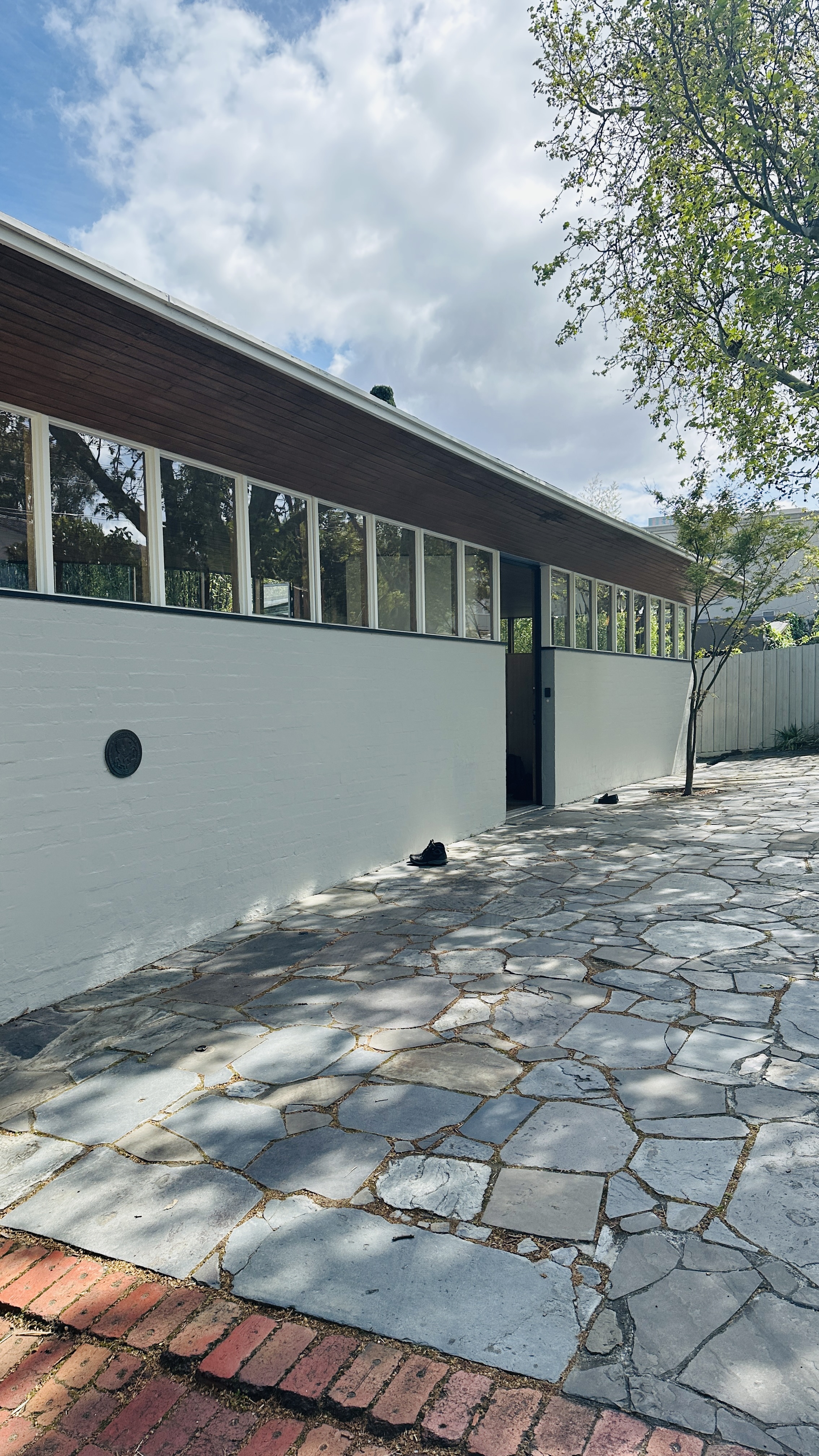
The Grounds House (Hill Street Flat 1), Toorak, and the Ramsay House, Mt Eliza, were open on the first weekend. The Grounds House is located in a tranquil neighbourhood of Toorak, with a peaceful stone-paved front court. The horizontal band of clerestory windows wraps around the square plan, giving a glimpse of the central circular courtyard and the light from the outside. The timber soffit/ceiling battens run continuously from outside to inside, leading viewers’ gaze into the house.
As one opens the door, the house reveals itself to be strictly organised by geometries. The internal walls and joinery pieces conform to the geometric control of the circular central courtyard, where wall elements parallel to the central circle are curved, whereas those perpendicular to the circle are radially extended to the square external enclosure.
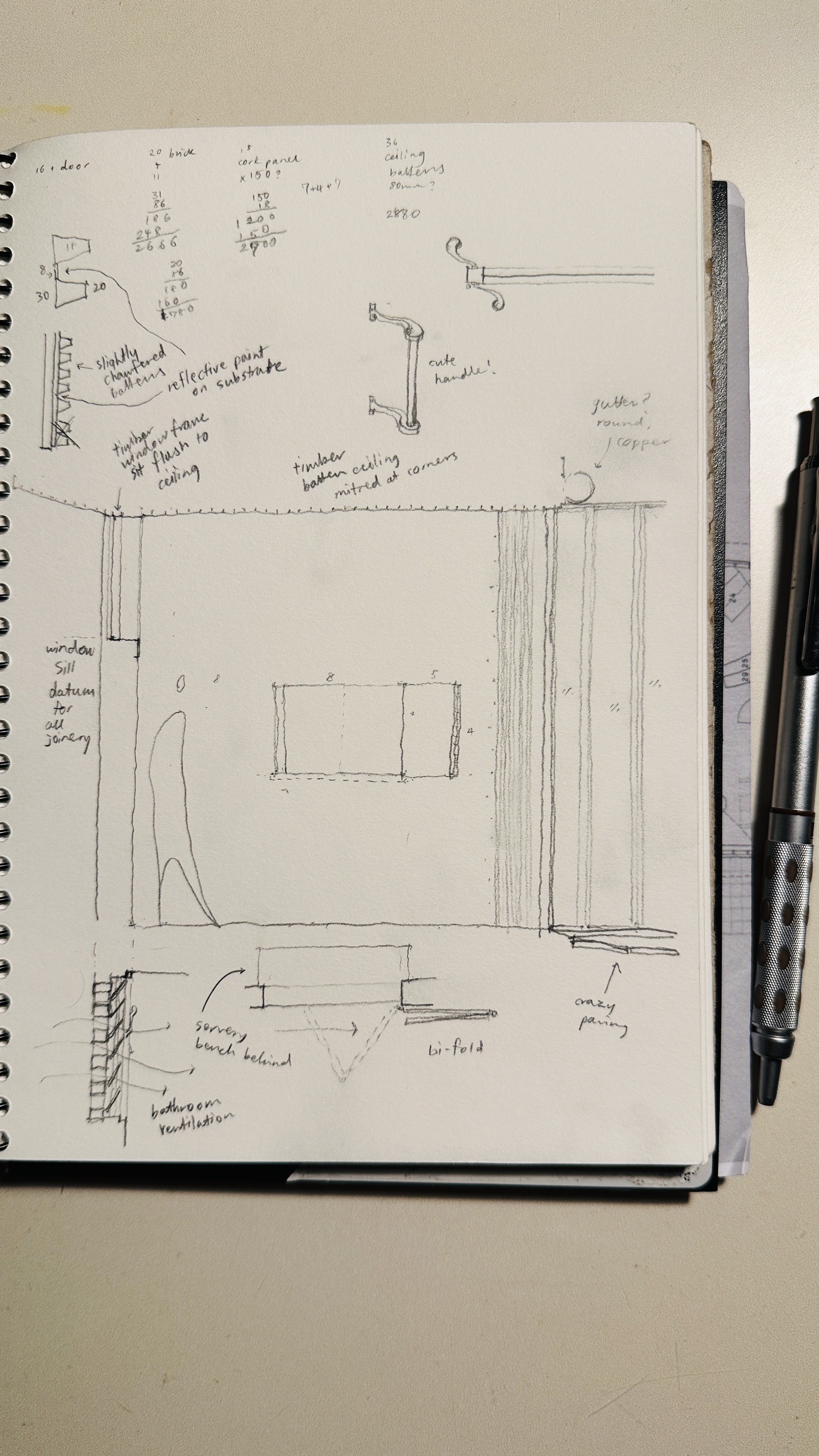
I loved a little detail of reflective paint on the wall between chamfered timber battens, which caught the light from the courtyard and shone as one walked across it.
The above-mentioned timber soffit panels are orthogonally organised to follow external walls, with chamfering at four corners. As I checked the basement, it became apparent that the concrete slab timber formwork was set out to match the layout of the timber soffit panels. I imagined how important the consistent architectural language for those two horizontal planes might have been.
On the second weekend, a selection of flats in the Moonbria, Clendon, Clendon Corner, and Quamby apartment complexes, all in Toorak/Armadale, were open. I volunteered at Moonbria, initially on level 1, ushering visitors to the top floor, and later in the flat renovated by Tony Lee.
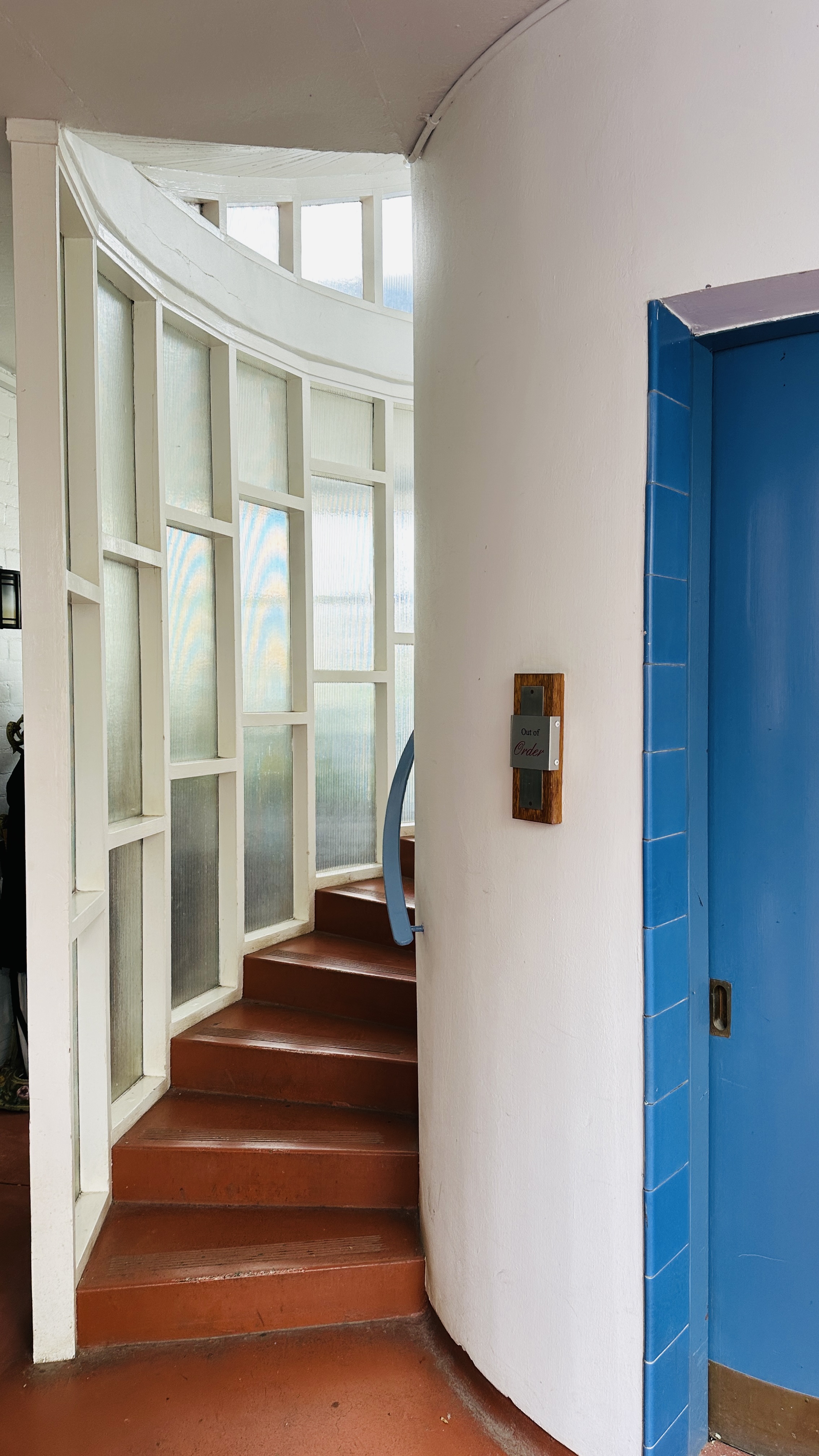
The spiral staircase around the now out-of-service round lift is surprisingly light-filled and gentle in atmosphere. The ribbed glazing, along with white framing and walls, made the very tight staircase spacious and enjoyable.

The colour scheme of the foyer and circulation space is kept simple yet rich. Matt finished bright marine-blue bullnose tiles are used on cylindrical columns, lift door reveals, and wide verandah ledges, offering a fresh Mediterranean feel. Additionally, the burnt orange (red sandy) concrete paint beautifully complements the greenery in the communal courtyard and the potted plants in front of the flat entries.

Inside the flat, restored to the original state by Tony Lee, was phenomenal. The apartment was full of joinery fun, including a Murphy bed with fold-out side tables, a cabinet whose top becomes a bar counter, a fold-out ironing board, a lower open carcass for storing a bar stool, and lots of storage cupboards. In particular, I loved the joinery units that function as part of a wall, serving both sides: some drawers are on the kitchen side, while storage cabinets are on the living space side, staggered to hold both.
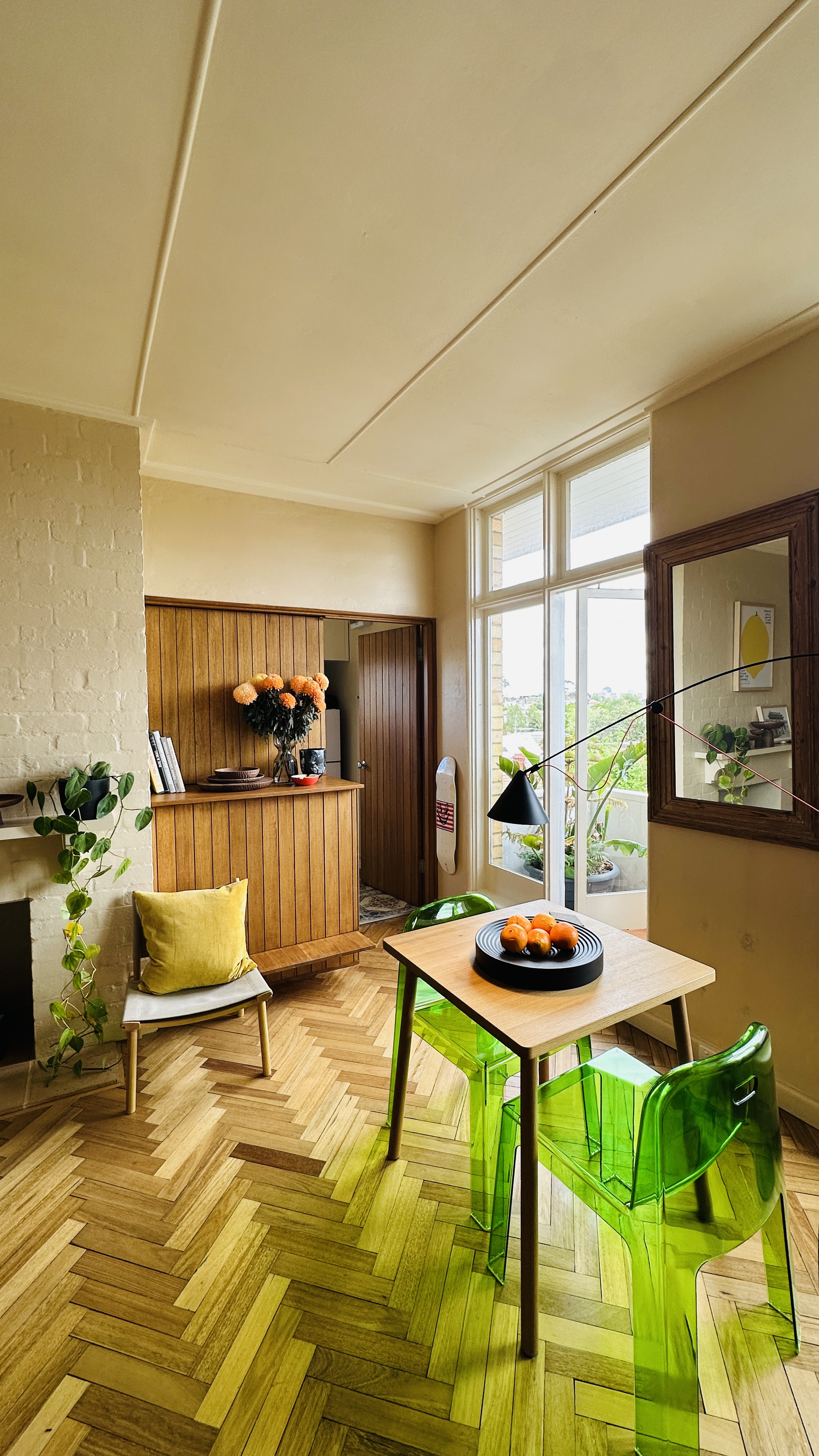

After the volunteering shift, two other volunteers and I visited Quamby together. Although there seemed to be a greater extent of renovation work undertaken, the consistent architectural devices—cross ventilation through full-height or clerestory louvre windows, ribbed glazing to diffuse light, and building orientation to maximise access to natural light—were present.
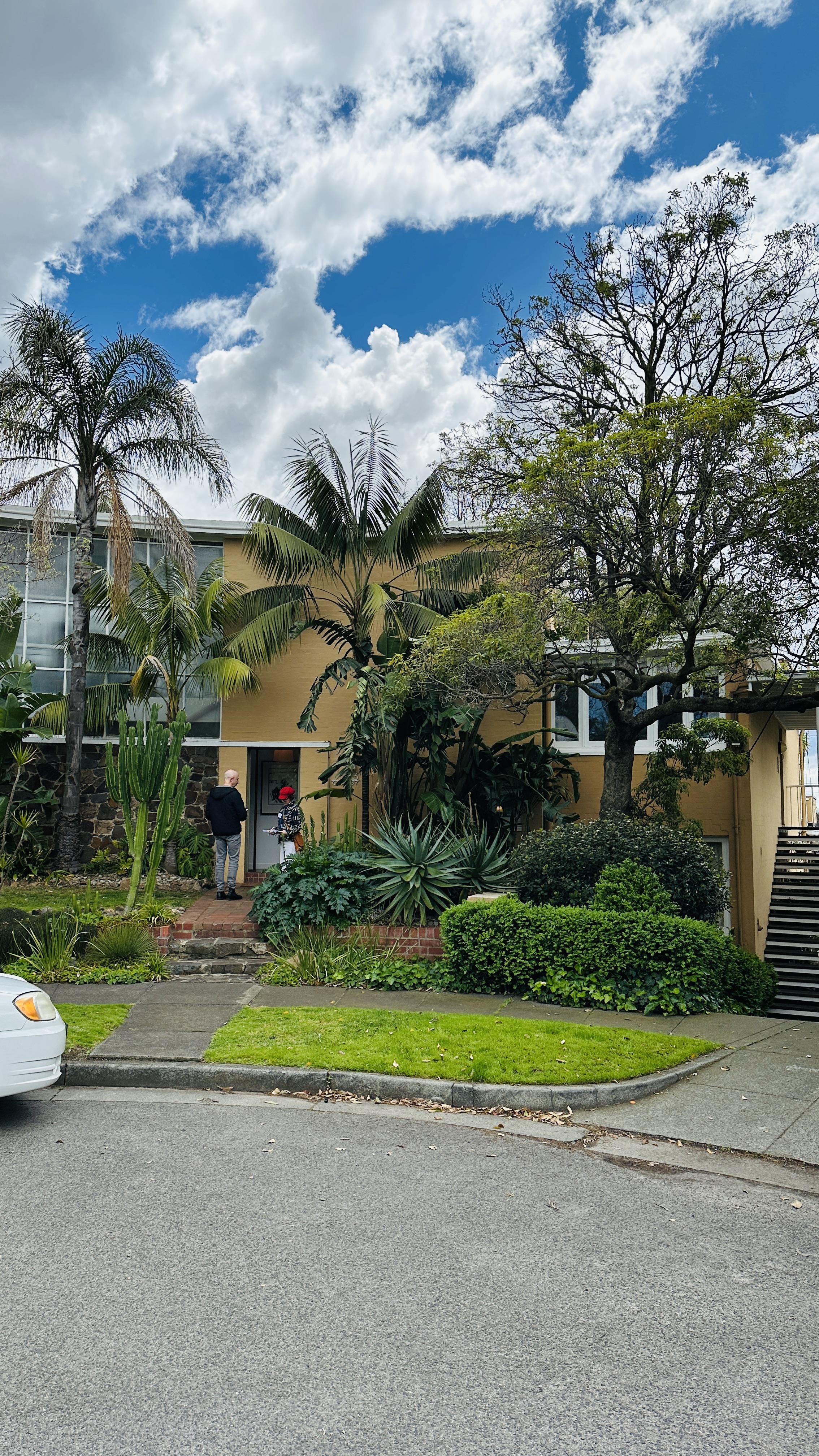
Lastly, the visit to the Clendon Corner flats revealed evidence of more extensive alterations and the need for different types of maintenance for the 75-year-old complex. Compared with the original plan, an entry staircase was removed, additional structural members were added to the upper-level verandah, and internal refurbishment removed many traces of Grounds’ design. It made me think about the amount of energy that goes into restoring and retaining the original design intent. As Tony Lee mentioned at Moonbria, living in one of the Grounds’ houses or flats is like being a custodian of the iconic design.
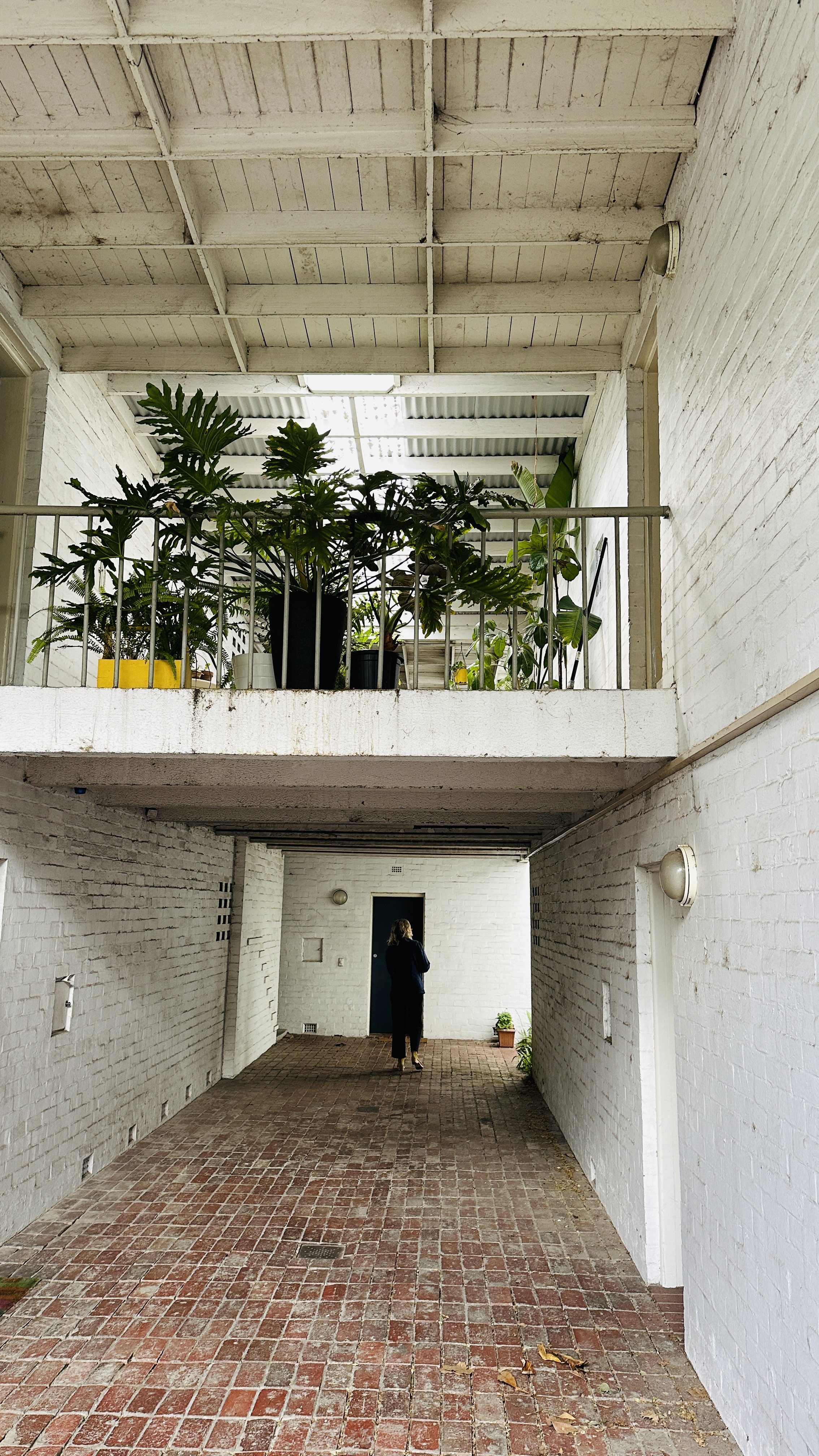
Through volunteering at the Roy Grounds Open Day, I learned that Tony self-published a book about Roy Grounds’ flats and houses that responded to the post-war material shortage and a lifestyle with a small footprint. Compared to Robin Boyd, whose work is represented by a well-established foundation that looks after the Walsh Street House, archival drawings and photographs, and has a great industry and media presence, Roy Grounds’ built and archival works are not necessarily as accessible to the public. Tony’s book is, therefore, an excellent addition to public knowledge of Grounds’ residential works, shining a light on the quality of design a tiny flat can have in the housing shortage of the past.

As the Grounds House (Hill Street Flat 1) went on the market for sale, we will hold our breath for the prospect of a design-oriented new owner who is keen to become a custodian of such beautiful work.

 Saran Kim | Blog