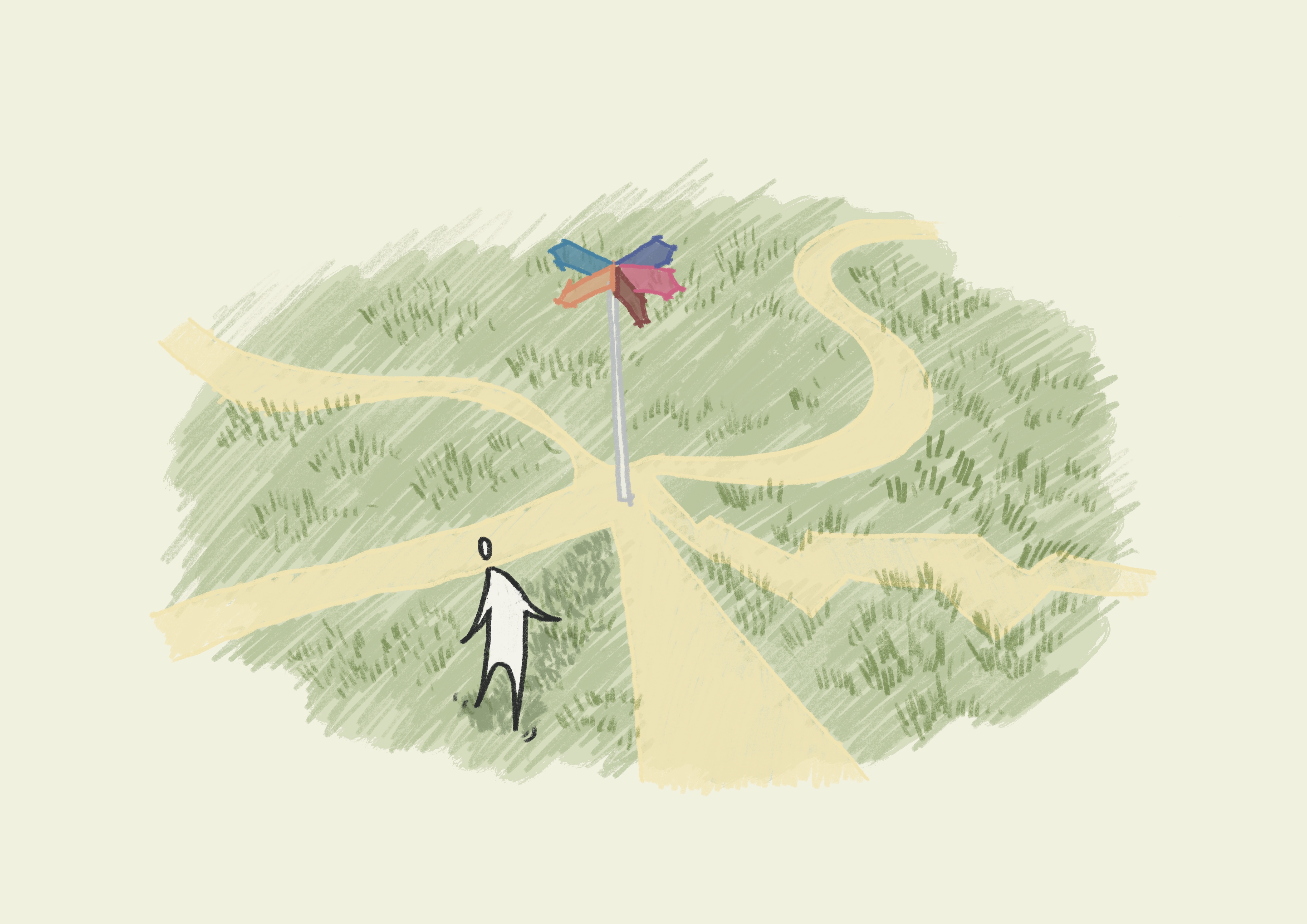
At a point in time, like a time capsule, this article (more of a collection of thoughts, perhaps a brain dump) might become something I’ll read back in five or ten years. Over the last half of a year or so, I’ve been pondering, researching and reading references on various perspectives on architecture that I am interested in exploring further. While a trajectory towards a potential PhD has always been at the back of my mind, the breadth of directions architecture can lead me in the field of research felt overwhelming.
I’ve thought many times about why I want to undertake a PhD. I do enjoy researching, reading, writing, and presenting findings as a personal pursuit beyond university or work, so it’s a natural progression from my tertiary education and the research collaboration/assistance involvement in projects at the university. However, architectural research can be conducted without the framework of a PhD; there are foundations supporting community-based architectural research projects, so a PhD is not the only choice. Then, why am I thinking of a PhD over other options? The main reason is the time I can afford (I’m sure it’s a long yet short three to four years), academic supervision that will help me be a better researcher, and academic recognition that can open up more doors in my career. I look up to many academics who are also practising architects; how they translate and integrate their research findings into real projects truly strengthens their academic and professional position – designing in practice as they think, study and communicate in their research work, and vice versa. I’m attracted to the role of an ‘academic architect’ who can bridge academia/architectural education and architectural practice.
I’ve been fortunate to receive advice from my academic colleagues and mentors. They recommended reading journal articles and books extensively, not limited by the discipline of architecture, so I can see gaps in the available knowledge that I can potentially research. They also told me to find ‘good questions’ yet to be answered; why would you reinvent the wheel if someone else had already done it and offered knowledge? Those ‘good questions’ also need to be of value to wider society: what is the intended outcome, and how does it benefit people?

Compared to other scientific disciplines, architectural PhD theses seem to be given broader ways of communicating ideas and conducting research processes. For example, studies into building systems and environmental performance may follow the scientific methodology of collecting, analysing and evaluating data from sensors located in a building or from a building management system. For heritage-related theses, a thorough investigation into a site’s historical, cultural, material, social and technological contexts and the studies of heritage significance and conservation approaches may resemble more historical and archaeological research. On the other hand, ethnographic research on placemaking, urban design and process-oriented design thinking may structure projects on interviews and a series of workshops that enable qualitative data collection. With research into more sustainable construction materials, the production of models and prototypes may involve more engineering and material science approaches. Nowadays, some institutions offer a practice PhD where well-established architects can base their research proposition on their architectural approaches and creative outputs. This multi-modal nature of architectural research fascinates me, and finding a topic that allows the intersection of disciplines and research methodologies would be quite fun.
Another aspect of research specificity is place and time. There may be a particular topic that has already been widely researched, but many research articles seem to articulate their originality by narrowing the scope of the research to a specific time and place of interest that highlights unique importance. As architecture tends to emerge from a particular circumstance, shaped by what is/was going on at a particular place and period, it may result in a different perspective on the subject matter that offers comparative values. However, part of me is eager to find a niche between existing discourses – something I can be both a pioneer and a part of groups of allies with similar epistemological attitudes. There have been a handful of research topic ideas that I put on hold from further studies, as I found academics who have already presented what I wanted to know. I’m finding that research activity is like a jigsaw puzzle; you don’t know the full picture, but you can join existing journal articles to piece ideas together, and what you thought were missing pieces are, in fact, simply yet to be picked and put in place by you… A genuinely missing piece only becomes apparent when you have already connected a substantial number of pieces.

In answering who would benefit from my research, I’ve been considering the balance between the aspects of storytelling (something anyone can acquire as knowledge) and practicality in architectural practice (industry knowledge benefited by professionals). Is my research about journalism uncovering or providing an insight into something, or is it assisting built industry professionals and broader communities with knowledge for more architecturally meaningful ways of living and working? There is no black and white here, but I believe the purpose of (or a belief in) research needs to be there from the beginning to be a lighthouse that shines a direction in the darkness. Down the track, I understand the ability to demonstrate the values of research becomes crucial for having funding granted, so the impact a project can leave would be a significant factor to consider. I’m leaning more towards exploring an aspect of knowledge for the design process I haven’t fully grasped in my day-to-day work, which I understand is also a challenge for many other architects. If the story (for example, of a case study project) can be communicated as a process of thinking and designing, it may become practical for others, too. I’m thinking about actions that I can take as part of or as a result of the research – can it be a springboard for more ideas and initiatives, or will it be the one-off thing that limits the potential of the research effort?
My approach has been to populate a table with column headings:
- Ideas, questions, thoughts;
- Keywords and themes (often noted in journal articles); and
- Reference (journal articles, books, etc.).
I also have a separate Word document to record key summaries of journal articles and books, and my thoughts and questions. Through this exercise, I’m noticing the lineage of thoughts via academics who tend to collaborate and work at specific institutions. It has helped me consider who I’d like to learn from and where to undertake a PhD. The synergy of research focuses and the expertise of leading academics/institutions appears to be a key ingredient for a successful research project (I’d imagine that academics’ supervision skills are as critical as their expertise).
I understand the research focus will ultimately change and become redefined over and over through the early stage of a PhD. Setting a statement/research question is undoubtedly one of the most challenging tasks for completing a meaningful project. I’m still just dreaming, but I might read this back one day and think about my younger self with a warm and fuzzy feeling.

 Saran Kim | Blog