On 10-11 May, I was fortunate to have had a chance to attend the Australian Architecture Conference held in Melbourne (a huge thanks to Architectus for supporting me and John for asking me if I was interested in attending). There were so many highlights and learnings from the conference that I’ve taken away; some challenged the roles of architects while acknowledging the limitations of the impact they can make, and some questioned the very idea of demolition, construction and our perception of materials and labour. Initially, I drafted this article summarising key ideas I collected as seeds of knowledge and inspiration from different presenters. But after realising that it was becoming more like a list of scribbles on my notebook rather than reflective writing, I decided to focus just on two presentations delivered by Dana Cuff (City Lab, UCLA) and Nigel Bertram (NMBW, Urban Lab at Monash University).
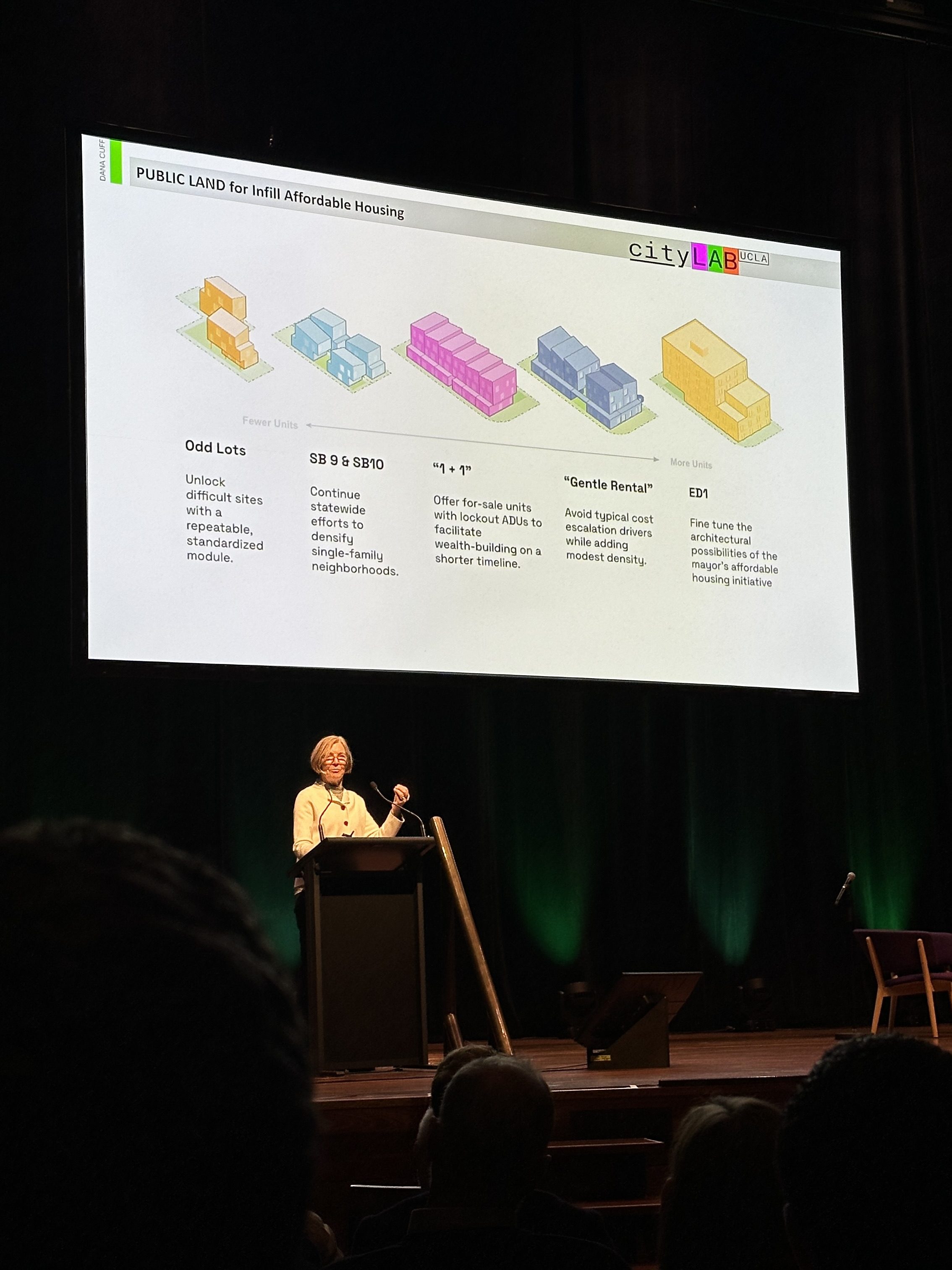
After listening to two full days’ worth of presentations, I noticed several characteristics shared by the two most convincing presentations (i.e., my favourite presentations!). Firstly, they demonstrated a seamless integration of the research and projects in practice. For example, Dana Cuff’s focus on housing beyond the production of houses tackled the ongoing challenges of housing shortage and the need for densification in sprawled suburbs. Through the lens of Production, Preservation and Repair, Partnerships, Public Resources, Policy, Protections, and Political Action, her long-term research projects highlighted the significance of being strategic in navigating often politically charged space; understanding what is going on and why it is going on (surveys and research), before deciding how to respond (such as proposing policy changes), established a clear line of thinking that helped community members and stakeholders see value in her propositions.
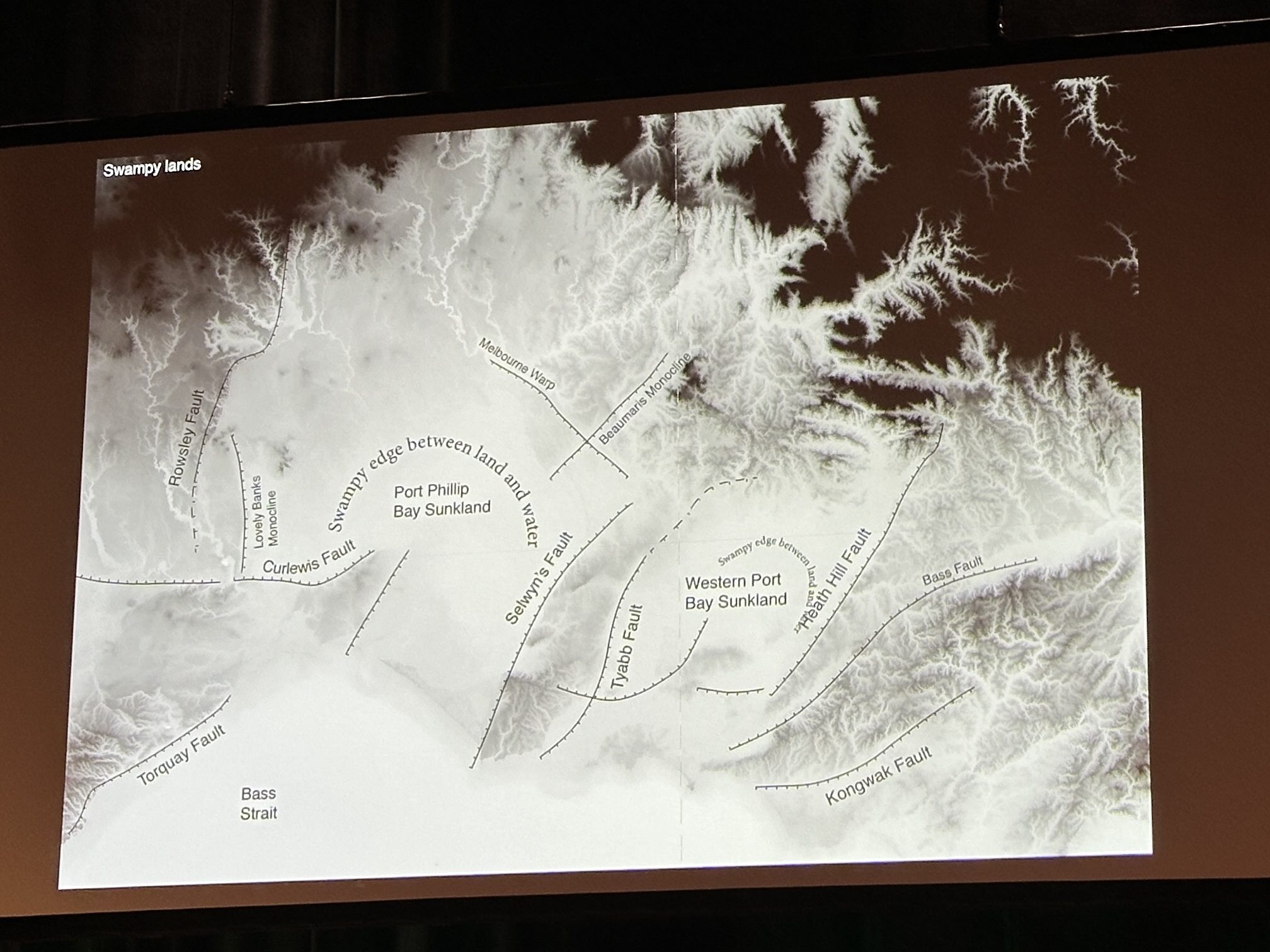
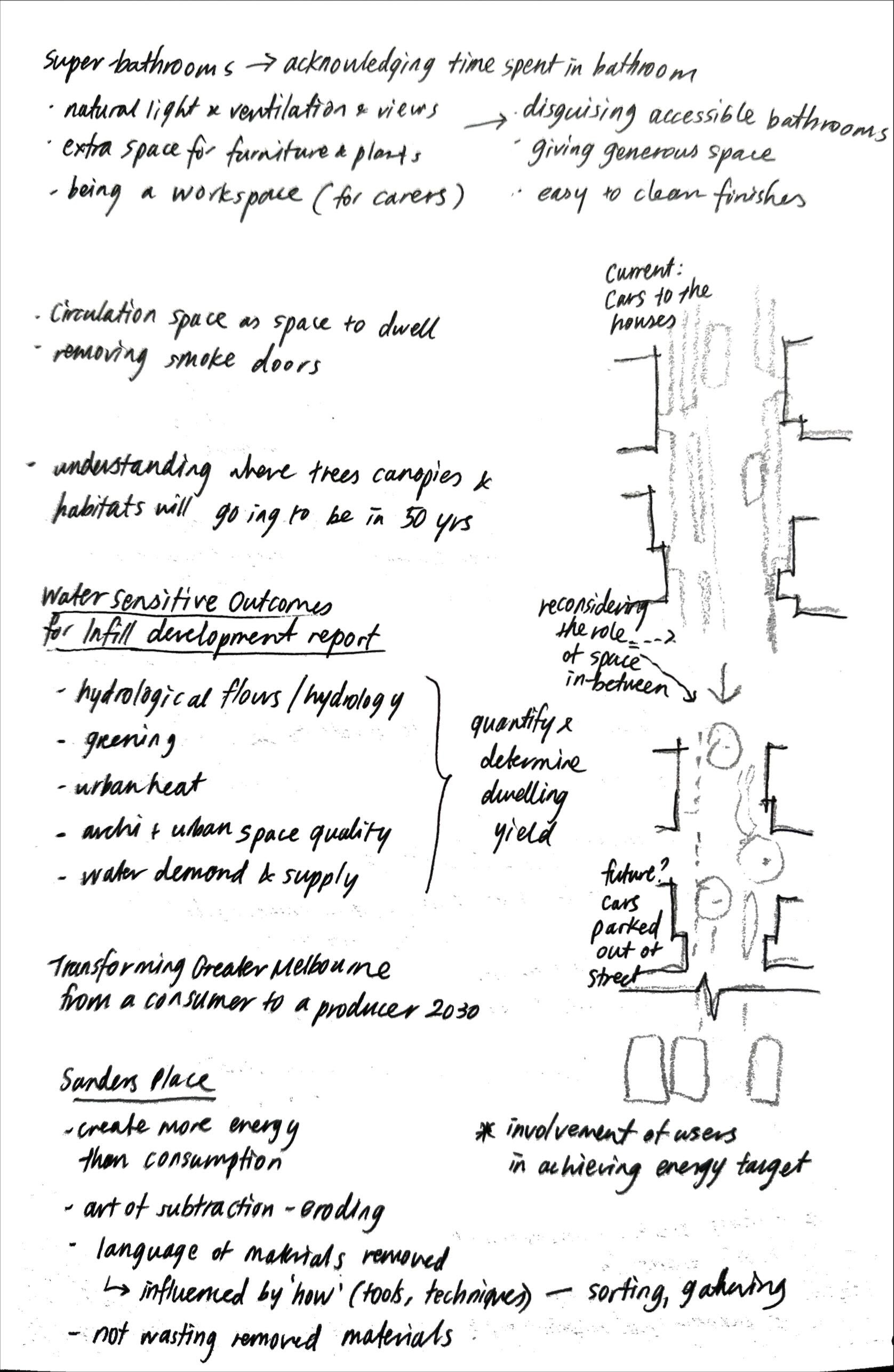
Secondly, great presentations provided diverse perspectives on the theme presenters have been pursuing. Underneath Nigel Bertram’s presentation on Market Hall (a project at the University of Melbourne), the Water-sensitive outcomes for infill development research and Sanders Place was the care for the landscape. Situating these projects in a large-scale deep structure (topography, fault lines and sunklands) that then informs the movement of water and “where water wants to go, wants to be”, the clarity of design thinking and consistent intentions behind design responses became evident. Complemented by fieldwork surveys, research into historical palimpsest of places, and the mindful removal and use of materials respecting the existing built and intangible urban fabric, Nigel’s presentation offered a multifaceted point of view on how to engage with places.
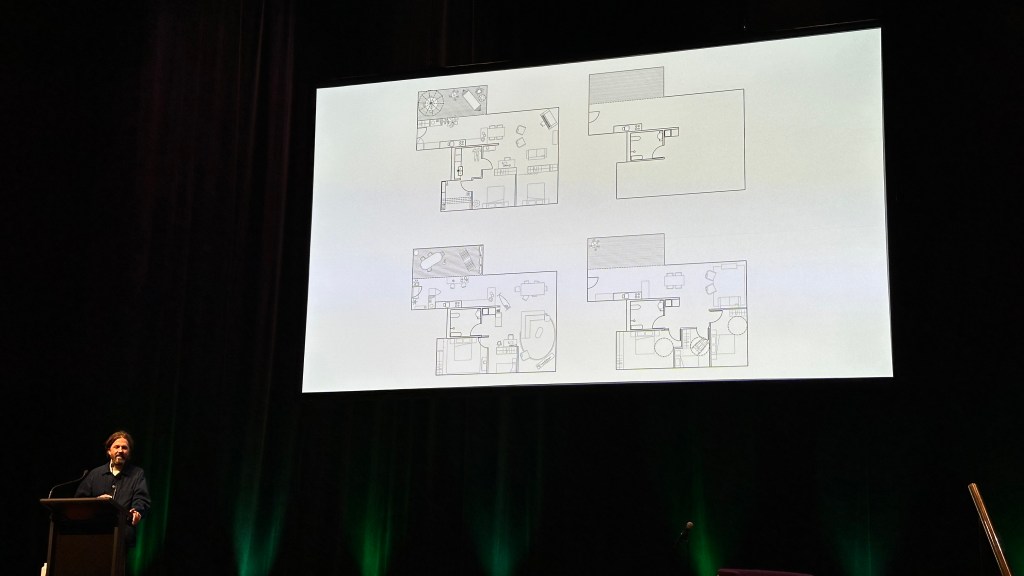
Thirdly, both presentations told the stories of the people whom the projects served. The BruinHub Pods project at UCLA, which Dana developed with UCLA students through workshops, responded to the needs of students who commute long distances to campus and want a safe and comfortable space to rest. To remove the stigma associated with using temporary sleeping spaces on campus, the pod design, surrounding environment, and security and booking system, as a whole, ensured the quality of life. Furthermore, connecting the frequent pod users to housing support as the follow-up highlights that the project’s purpose is not just about producing or constructing the pods, but providing a holistic support system that encompasses creating places. Similarly, the post-occupancy evaluation for social housing that Nigel has been working on through St Albans (NMBW Architecture Studio in collaboration with Monash Studio Lab) reflects the occupants’ stories in the design of their units. Rather than designing the housing units to the full extent, the project delivered a shell to be developed with residents through 45-minute on-site conversations, marking furniture dimensions and locations on the floor. Its design process demonstrated architects’ understanding of the importance of calibrating the living environment to individual lifestyles and needs, ensuring that the project helped kick-start residents’ time at St Albans. The concepts of a dignity-enabling environment and super bathrooms acknowledging time spent in the bathroom (not just for daily use but as a workplace) were eye-opening and, at the same time, raised questions for the existing mainstream procurement process in residential developments, which may not necessarily allow this co-design approach. The stories of occupants told through these projects suggested how the built fabric itself is not the focus of the projects but, ultimately, what it can contribute to occupants’ lives.
Lastly, both speakers described how their projects relate to the history of places past and future while acknowledging their project time spans. From Nigel’s reference to the memories of the place, such as a creek running underneath Elizabeth Street from Parkville, to Dana’s summary of the American social housing history from the 1890s to 2019 onwards, their projects articulated the connections with the present but also the past and the future. Their way of thinking considered their projects’ impact on the environment and society over an extended timeframe, some as a catalyst for further cultural shifts, some as a built fabric with longevity. It was, after all, reassuring (and scary to some extent) to hear Dana say that the project on the densification of sprawled suburbs has been going for the last ten years, as it proved that great collection of wisdom, design thinking and real-life impacts can only emerge when one can afford time to develop with tireless efforts and respectful stakeholder engagement.
It was such a fruitful learning experience attending the conference; there were so many fascinating ideas from numerous speakers. Although I decided to write only about Dana and Nigel’s presentations, I hope to someday write about other speakers or reference the knowledge they shared during the conference in my future projects.



 Saran Kim | Blog