
The new season of the Triennial exhibition at the National Gallery of Victoria began in early December 2023, and it has been such a joy visiting the exhibition a few times over the last couple of months, having fun discovering new and fresh works in various mediums and expressions.
But what made me want to write this article was not necessarily the beauty of artworks; it was, in fact, the curation of the exhibition that made me giggle, ponder and make sense of the relationships between the permanent collection and exhibition-specific works.
The exhibition’s curation is an omnipresent yet crucial design element that shapes how visitors perceive and appreciate artworks. One of the first pieces of advice I got in high school learning about curatorial studies was to ‘look at one work, then the works on the side, and the works on the wall opposite’ – imagining the relationships between works in a space invites me to appreciate curatorial design. Within a broader concept that spatialises the holistic arrangement of works (e.g. chronological order to describe periodic movements, specific themes, styles and mediums, etc.), one can perceive how works speak and relate to each other (or not). It’s an added layer of fun that reflects the creativity of curators.
In the Triennial, I found levels 1 and 2 in the NGV Contemporary building, with exhibition works scattered among the permanent collection works, particularly fascinating. Here are some of the fun I had in thinking about curation.
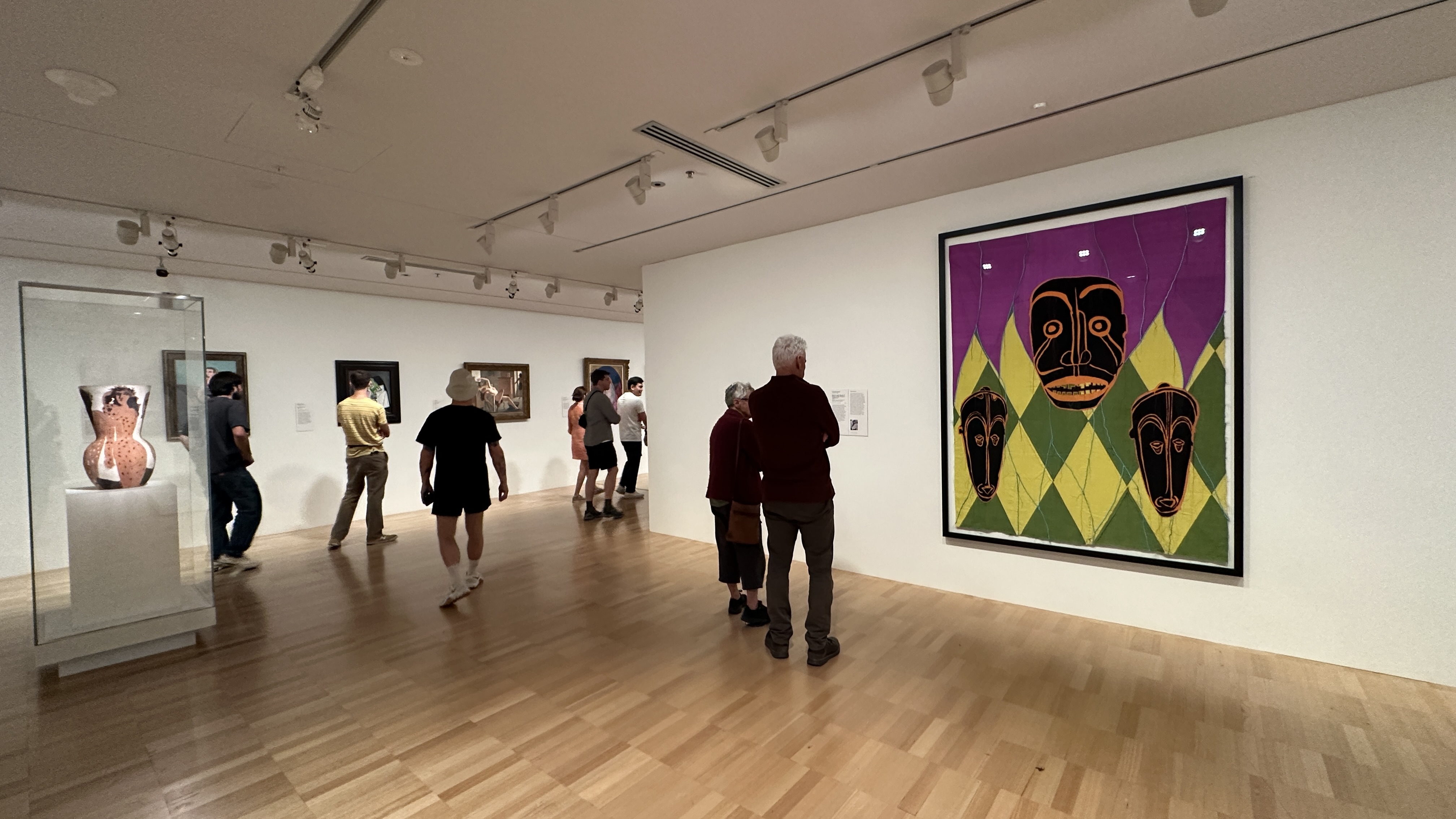
1. Relocation of Picasso’s Weeping Woman to position Modern Magic by Yinka Shonibare
As I entered the second room in the Late 19th & early 20th Century Paintings & Decorative Arts Gallery on Level 2, I realised the wall facing the entry into this room celebrated Shonibare’s large-scale quilt work, where Picasso’s Weeping Woman had been located before the Triennial. Learning that Shonibare explicitly references Picasso’s work and his collection of African artefacts made me ponder if the display of Shonibare’s work, being open to appropriating European ethnic art, in this location deliberately suggested the connection with Picasso and his appropriation of African art.
2. Two Women and Interior Spaces
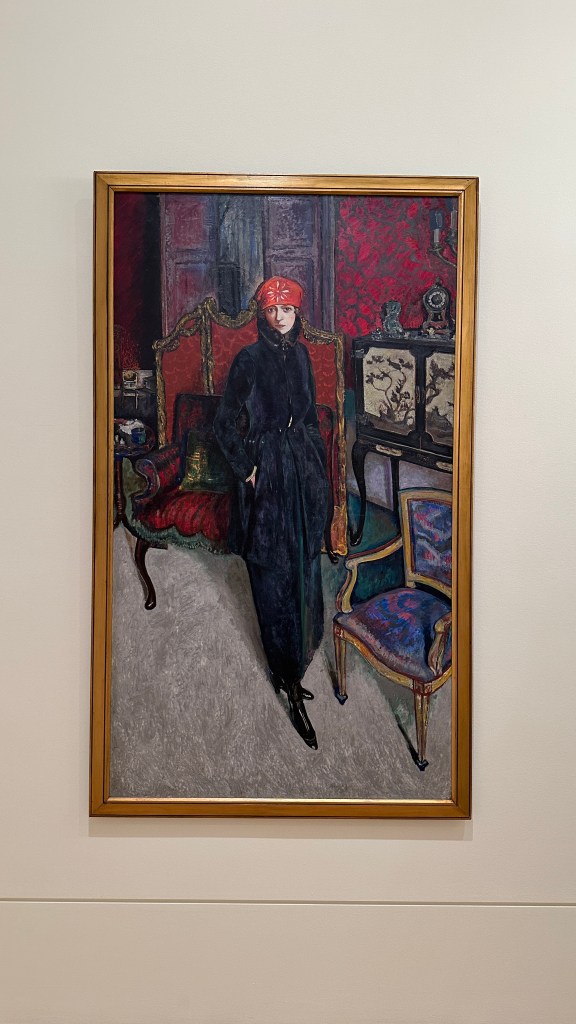
Having two portrait paintings on a vast wall, Principia and her pet by Paulina Olowska (part of Triennial) and Mrs Fairbairn (Nancy Cunard) by Alvaro Guevara (from the permanent collection) in the International Painting on Level 2, sandwiching an entry to the next exhibition space between them, forms a direct comparative relationship in terms of the figure’s interaction with depicted internal spaces. While both paintings feature a female figure respectively as the focal point, they embody contrasting characters: Guevara portrays Cunard as a strong, independent woman ready to leave the confining, seemingly oppressive room, while Olowska paints a ‘titular… glamorous school principal’ with a pet dragon in a room full of dragon artworks that suggest her control over the interior. Observing two paintings in parallel gives a new perspective on the role of interior space, colour palette, and subtle movement effects created by slight differences in framing angle. The observation brings the viewer to notice the expansive scale of the exhibition space itself, further reinforcing the sense of confinement captured in the paintings.

3. the Salon Gallery and the Questioning
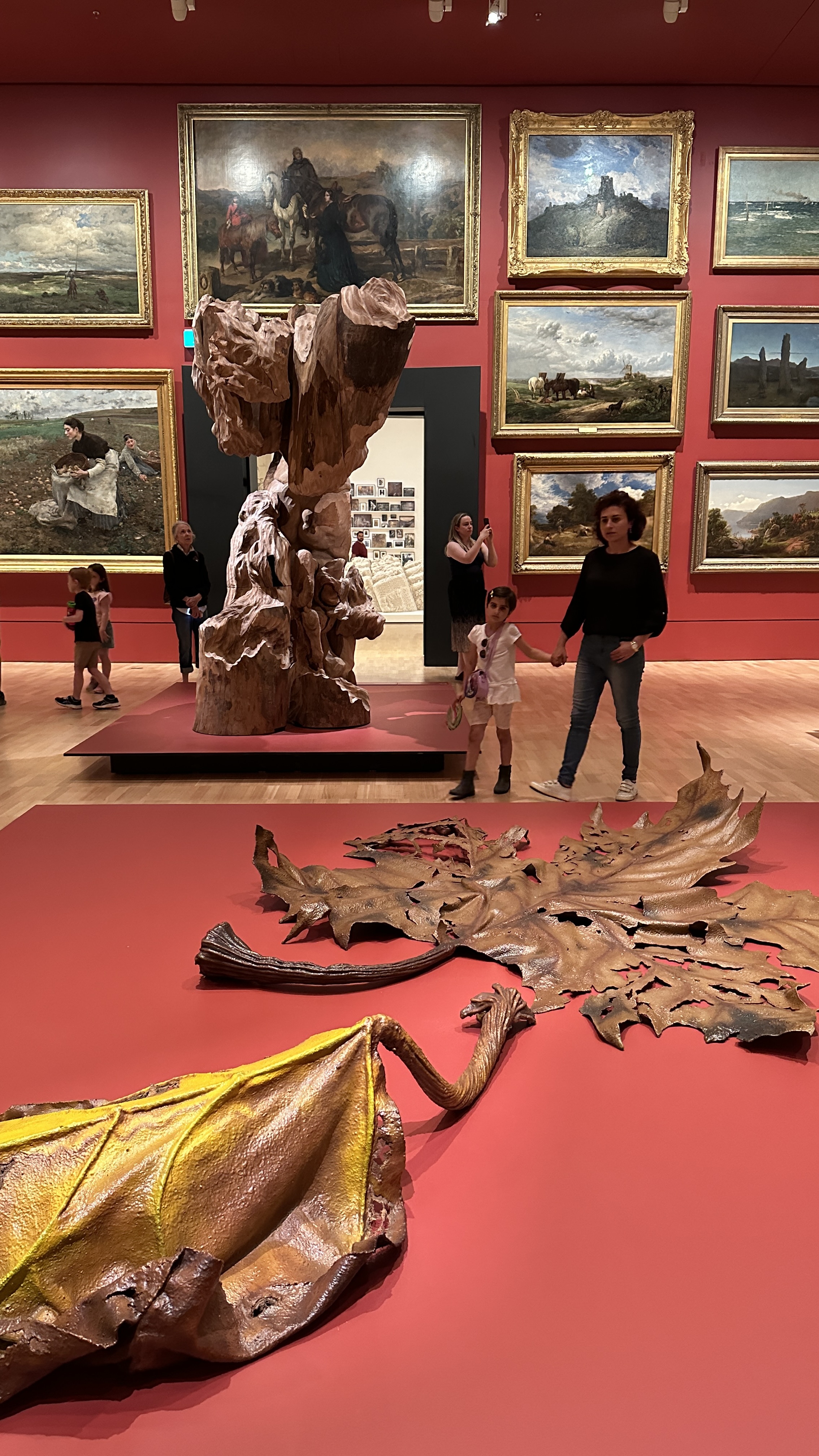
The installation of Triennial in the Salon Gallery, known for a myriad of 19th-century European oil paintings covering the entire red walls, became an immersive space for questioning the status quo concept of permanence and the narrative around landscape, individuals and societies. Several works were integrated into the Salon as part of Triennial, including the hidden order of the whole (Venus) by Todd Gray, which directly engaged with a somewhat oppressive sense of ordered painting frames through overlapping photographs, Fell by Ashley Jameson Eriksmoen and works of enlarged leaves by Joshua Petherick and Lewis Fidock, which material representation contrasted vividly against the confined, composed nature of paintings, and Glowing Pains by Shara Hughes that highlighted the complexity of personal mental space through a depiction of landscape. Through the insertion of Triennial works that deal with psychological, temporal, environmental, and historical subject matters, curators effectively articulated the shifting perspectives on Western art of colonial times and the spatial nature of the Salon in resonating with works of such period.
4. Ways of Capturing People in Everyday Moments
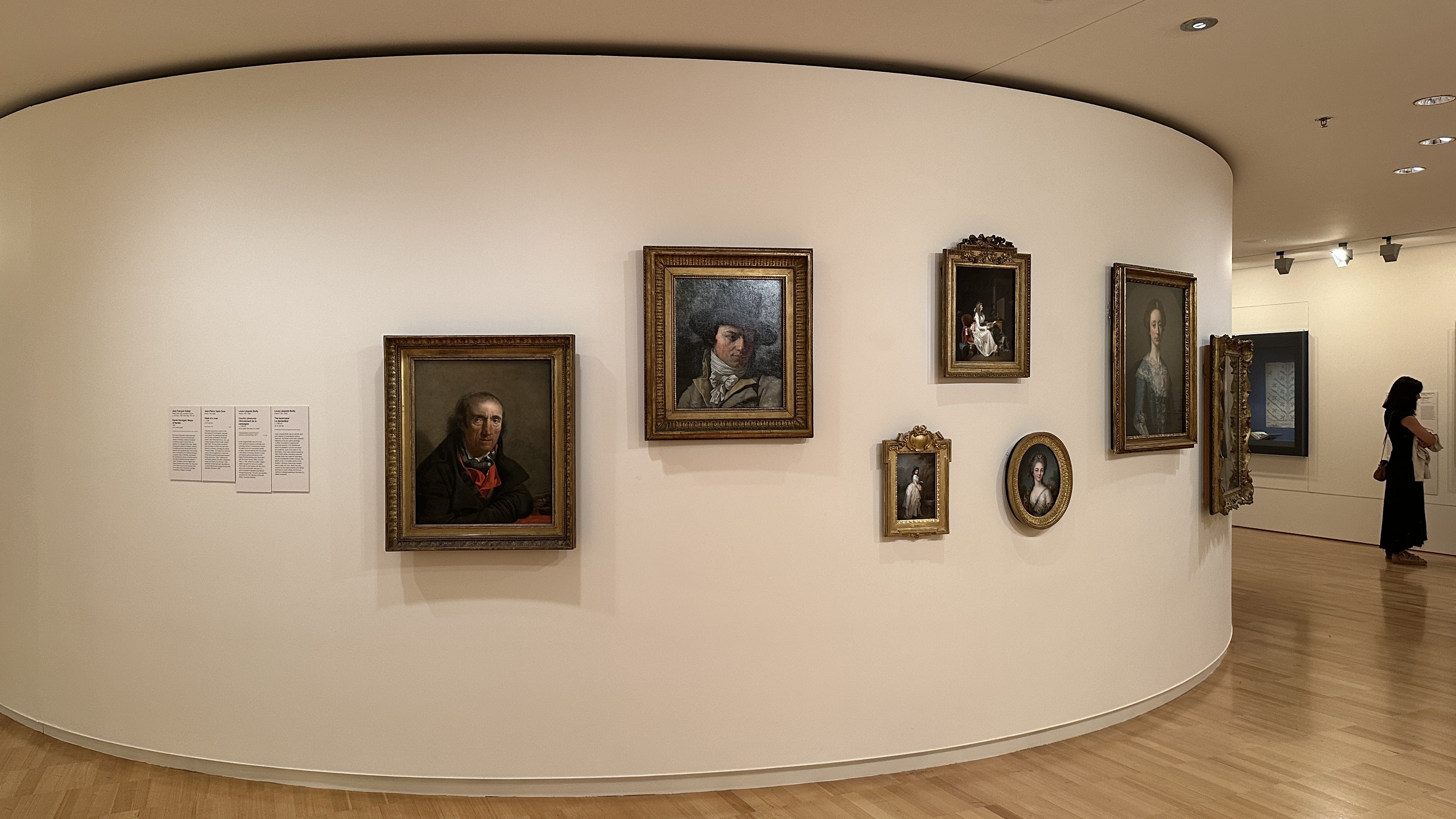
Against the small 17-18th century European portrait paintings on a curved wall is a series of photographic works by Tyler Mitchell, capturing everyday moments in the reimagined ‘Black Utopia’. The contrast between the permanent collection of portraits and Mitchell’s works felt multilayered: the spatial tension between the convex curve and linear perimeter walls where works face each other, the relaxed nature with a sense of movement in Mitchell’s works against the stiffness of posture depicted in portraits. While both strings of works are highly curated in compositions and overall tones, Mitchell’s photographs have a stronger sense of place and humanness that invite more emotional responses from viewers than portrait paintings.
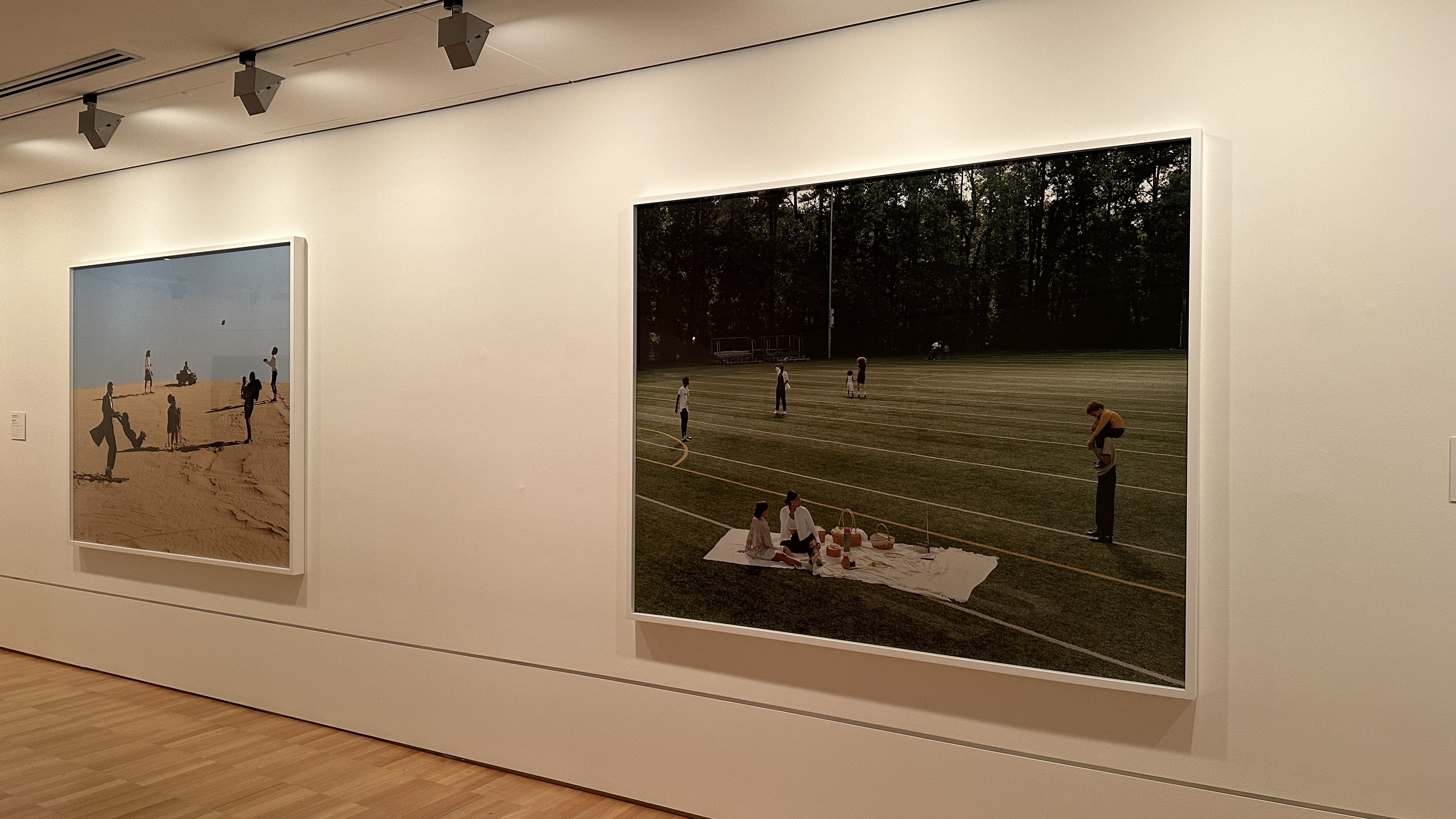
There were so many other works that reflected the curators’ considerations in forming relationships between the artworks of the Triennial and those from the permanent collection, and thinking about reasons behind methods and approaches of exhibiting works enriched my experience at the NGV Triennial.

 Saran Kim | Blog