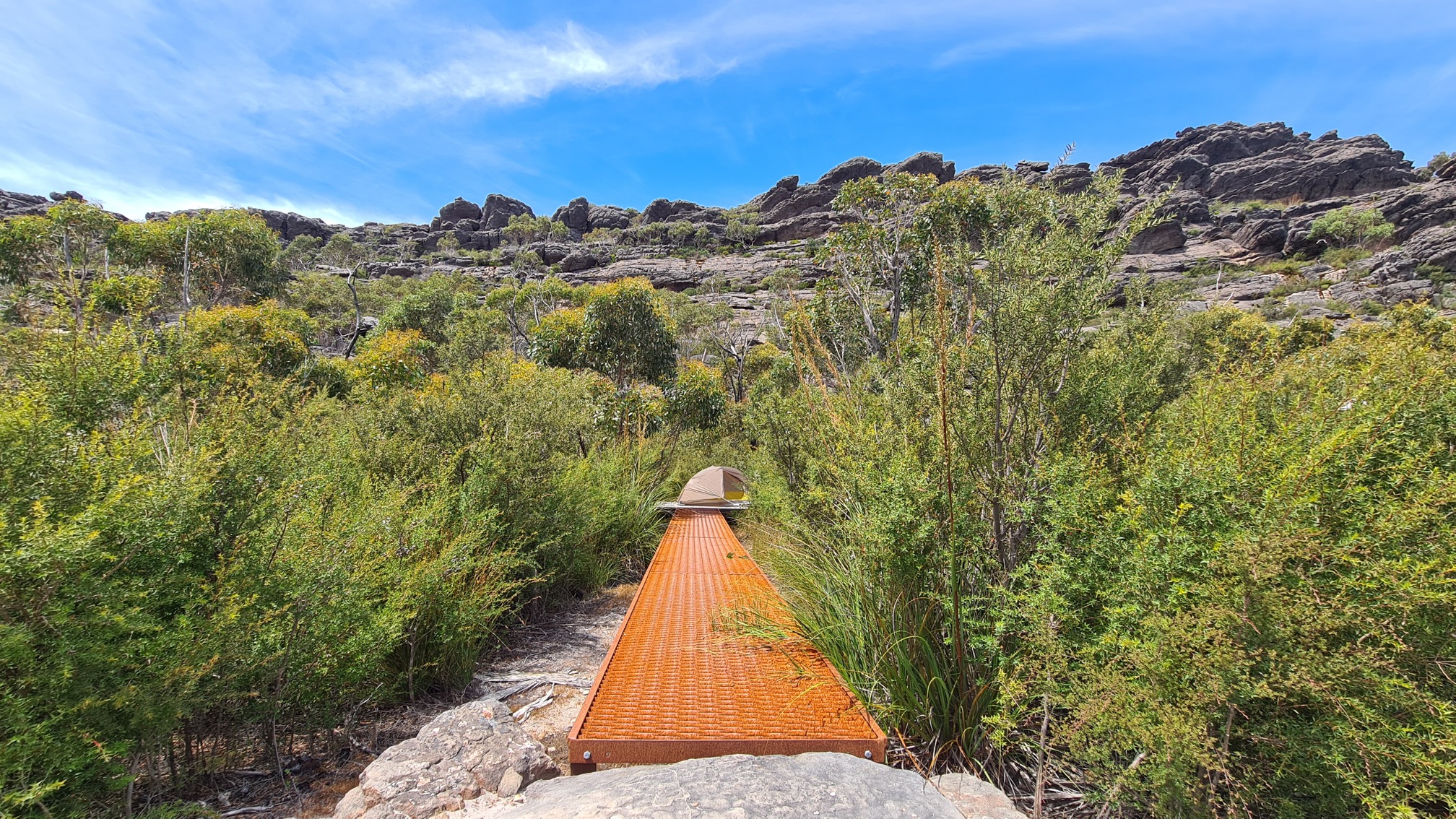
One of the key focuses of the research project on Japanese and Australian landscape architecture I’ve been working on with Assoc. Prof. Jillian Walliss and Dr Heike Rahmann explores the possibilities of capturing and communicating landscape through moving images. This article is about my thoughts on the experience of documenting landscape architecture projects through filming, weaving together interviews, on-site footage and atmospheric sound.
As a film editor, designer and translator of the project, one of the crucial aspects was ensuring that the films accurately captured the context of places and the design responses of landscape architects through storytelling. While I was familiar with how architectural projects are often captured (such as Never Too Small, The Local Project, etc.) that revolved around buildings and human occupation, it became apparent that the same filming methods wouldn’t necessarily work with landscape architecture projects. It is because the place itself (broader landscape and the journey to the project site) is as important as the design intervention in grounding the design and reinforcing the connection between them. Therefore, the communication of each project had to encompass not only the challenges and design solutions of the project but also the way in which landscape architects understood the place as a whole.
Cinematography & Filming Trips
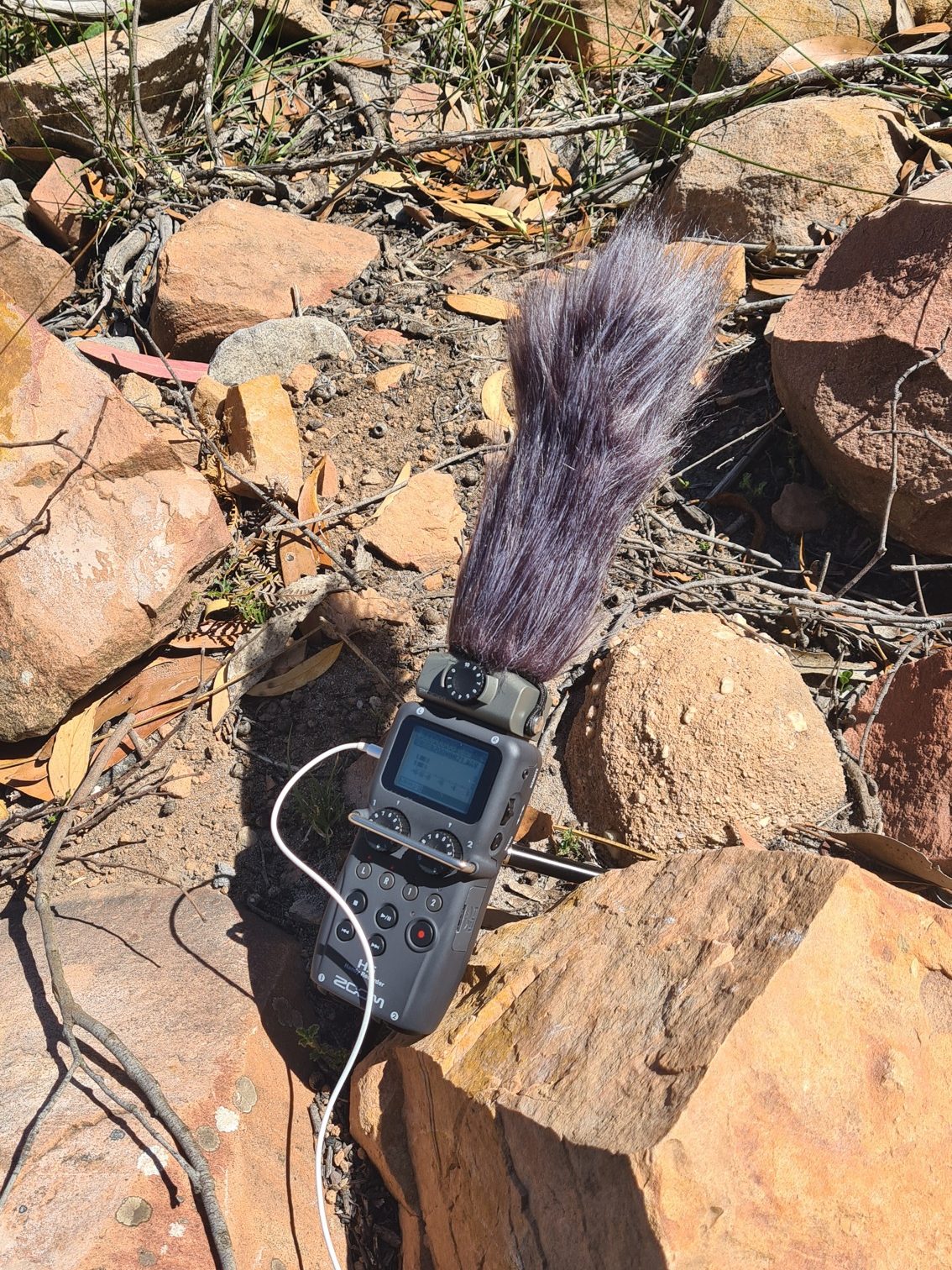
The cinematographic approach had a significant influence in telling the stories from a design perspective and distinguishing them from the appearance of promotional video format. We engaged with Rachel and Dan from the RMIT School of Media and Communication, who helped us with the equipment handling, interview techniques and filming/editing methodologies. After some trials and errors, we found that the cinematic mode on iPhone with a DJI gimbal was more reliable and easier to handle than a Lumix DSLR camera on a large tripod. For the microphone, Sennheiser AVX-MKE2 became our go-to lav mic, especially when we were interviewing outside on the project site. For the atmospheric sound, I took my Zoom H5 with the SSH-6 shotgun mic with a small tripod which helped me capture the birds’ songs, the busy traffic noise in the middle of Tokyo and the sounds of water. When I was recording the sound while hiking the Grampians Peaks Trail, it was so surreal and delightful to listen to the unique bird calls from the other side of the mountain.
Based on our prior knowledge of the projects, we made a list of questions for the interview, ensuring that we focused on the theme of change-makers. During interviews, project landscape architects gave us insight into their design processes and how they dealt with challenges, which enriched the narrative. As I was interviewing Japanese landscape architects, I tried my best to transition from one question to another smoothly, picking up words in their responses and utilising them as a segue into the next question rather than simply reading out questions from the list. It became clear that it’s important to respect the pauses in interviews while the interviewees were pondering, and finding comfort in those moments felt culturally familiar to me as a Japanese.
Before the on-site project shooting, we discussed what we needed to film on the site; the elements mentioned in the interviews were the priorities, then the tectonic details, materiality, vegetation and special features of the landscape. As I started editing videos, it became clear that the footage we didn’t consider much of on the site was the unique aspects that provided depth to the storyline. Capturing a wide variety of elements with several framing and camera movement approaches helped us identify the best shots to include In the films. Our filming skills gradually improved over the course of the filming trips, as we understood the optimal speed of movement, framing, types of footage needed, and how to control gimbals better.
Editing Process
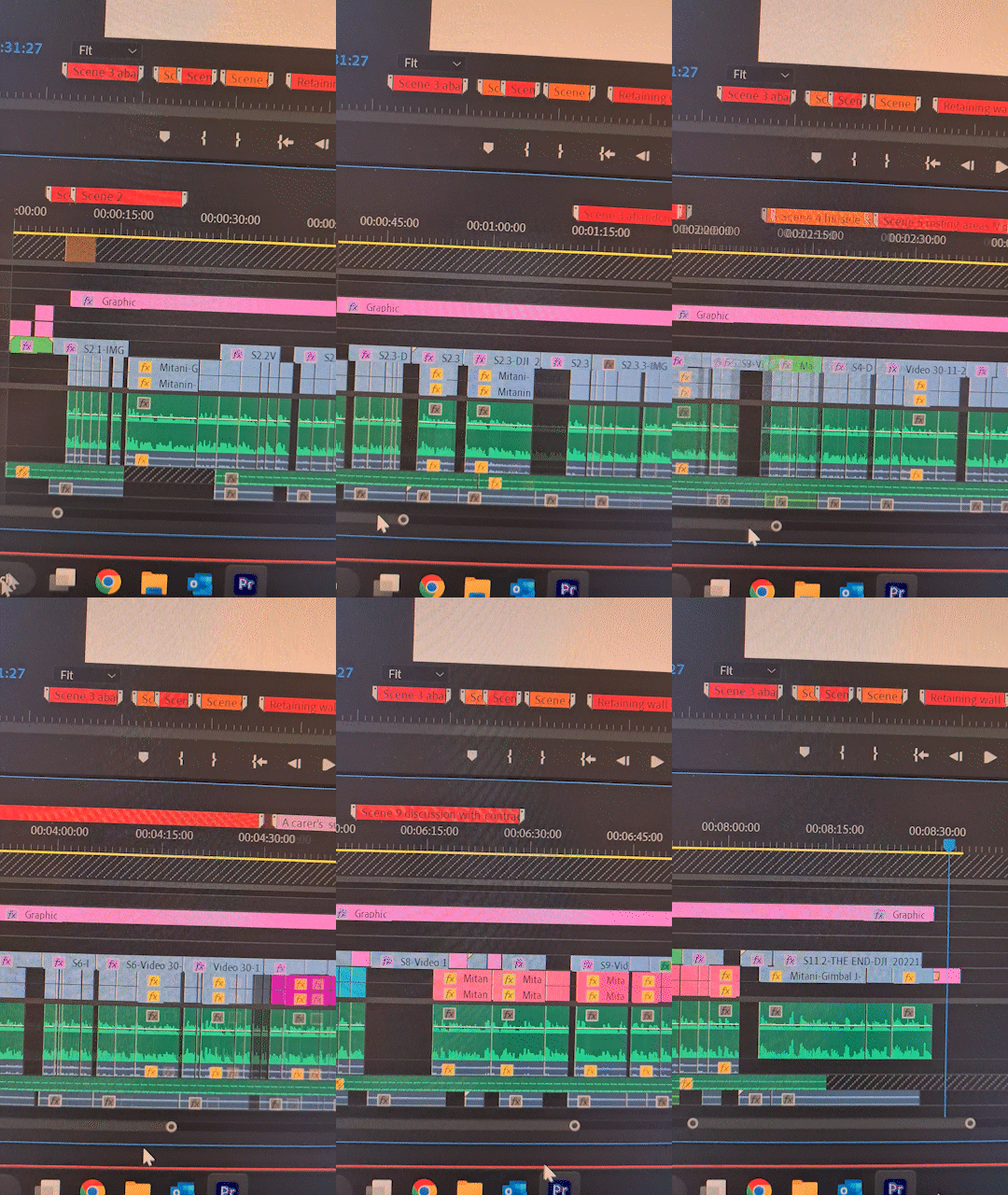
The editing process for the project films consisted of:
- summarising the interviews into dot points
- carefully selecting discussion points and structuring the narrative
- aligning videos with audio
- Extracting selected segments and structuring according to the narrative
- Adjusting transitions between interview segments (including adjusting audio and removing any noises)
- Adding opening and end credit
- Overlaying B rolls and atmospheric sound from the site, adjusting the audio level
- Adjusting the transitions between discussion themes (transitions between B rolls)
- Transcribing, translating and captioning
- Exporting
With the selection of B rolls (videos shown while an interviewee is speaking), we were mindful of their relationships with spoken words as well as the overall flow of the film. For example, for the film on Okutama Forest Therapy Trail, we wanted to ensure that the viewers could see the journey to and through this trail and experience the atmosphere of the place, including its rural landscape, light, air and topographic conditions. The balance between videos with static, moving and panning camera work became important as well, particularly in creating a cohesive and steady pace across the films. It was a steep learning curve for me to understand how to manage content effectively (having hundreds of videos and audio files) and edit each 1-hour long interview into the 6-minute portion of a 10-minute film – it made me realise the power and responsibilities an editor has in shaping the communication of stories.
Translation & Subtitling
Since some interviews were conducted in Japanese and some in English, subtitles became crucial for communicating stories to both Japanese and Australian (English-speaking) audiences. On Premiere Pro, I realised there’s an auto-transcription function that became extremely handy. The hardest part was translating stories with such nuanced expressions specific to each project or landscape architecture as a discipline. One of the memorable phrases I encountered in one of the projects was, “We worked with the landscape to…”. ‘To work with’ in this context is not about a job or business, nor manipulating the landscape to realise the design. Rather, it suggests a continuous collaborative relationship with the landscape as a living entity. I ended up translating it as something like “ランドスケープと二人三脚で…” (二人三脚 means running a three-legged race), which is not a direct translation but effectively implies that the landscape architect and the project client respected what the landscape wanted to be. I spent a significant amount of time exploring different ways of translating each sentence, contemplating how to infuse the landscape architects’ approaches towards landscape in the selection of words, phrases and tone of voice.

This project has so far opened up a whole avenue for me to explore and deepen my understanding of the relationship between beautiful landscape architecture works and the means of communication for a broader demographic audience. I’d like to thank all the landscape architects and clients who were extremely patient and kind with me during the filming trips, and Jillian and Heike for giving me such amazing opportunities. I’m keen to continue developing into the future the skills and knowledge I was fortunate to be able to acquire through the project, including multimedia production, audio recording, interviewing, translation and storytelling.

 Saran Kim | Blog
That was a fascinating post, Saran. Really interesting to read how it is all pulled together and makes a layperson appreciate the hours of work that go into the making of projects.
LikeLiked by 1 person
Thank you Erica for reading the article! It might seem like a lot going on but each step has really given me joy and excitement 🙂
LikeLike